
General-purpose humanoid robots are in the headlines, but is the hype justified? What’s the point of having a robot home assistant when it still needs a “guy behind the curtain” to control it remotely?
Despite the challenges, robots, even those that look like humans, are seriously considered as future coworkers in business environments.
According to the McKinsey report ‘Will embodied AI create robotic coworkers?‘ the idea that AI-powered robots will become general-purpose coworkers is grounded in real technological progress, but not an overnight reality.
How the technology has advanced
What is feasible today or in the near term:
- Tech developers already test robots with embodied AI (AI integrated with physical machines) in warehouses, factories, hospitals, and fields. These are not just fixed industrial arms; they’re robots that can adapt to dynamic environments and follow verbal instructions.
- Many general-purpose robots under development can perform multiple tasks (pack, pick, lift, inspect, move), and some prototypes demonstrate impressive mobility and agility.
- Investment and innovation have surged: funding for general-purpose robotics grew fivefold between 2022 and 2024, and patent activity in the space has increased significantly.
The challenges
McKinsey is clear on the limits:
- Humanoid robots are still in an early stage. Mobility, dexterity, reliability, and cost are significant barriers. Even advanced prototypes (e.g., robots running or climbing) are far from the consistent performance needed for broad, unsupervised deployment.
- The article explicitly states that robots that look human aren’t the point; versatility and adaptability are. That is, the shape (humanoid or otherwise) is less important than what the robot can actually do reliably in a human environment.
- Many critical technologies are still immature: foundation AI models need massive task-specific data to operate robustly in real physical contexts, battery life remains limited, and manipulation (hands/grippers) still lags human performance.
- McKinsey emphasizes that adoption isn’t just technology; it requires changes in safety standards, regulations, workforce skills, and organizational readiness to deploy and scale these systems.
Still a long runway
The foundations for “robotic coworkers” are being built now. Mechatronics has advanced significantly, but the software stack is one of the biggest limiting factors for real-world deployment outside controlled settings. Investments are about building capabilities, not finished products.
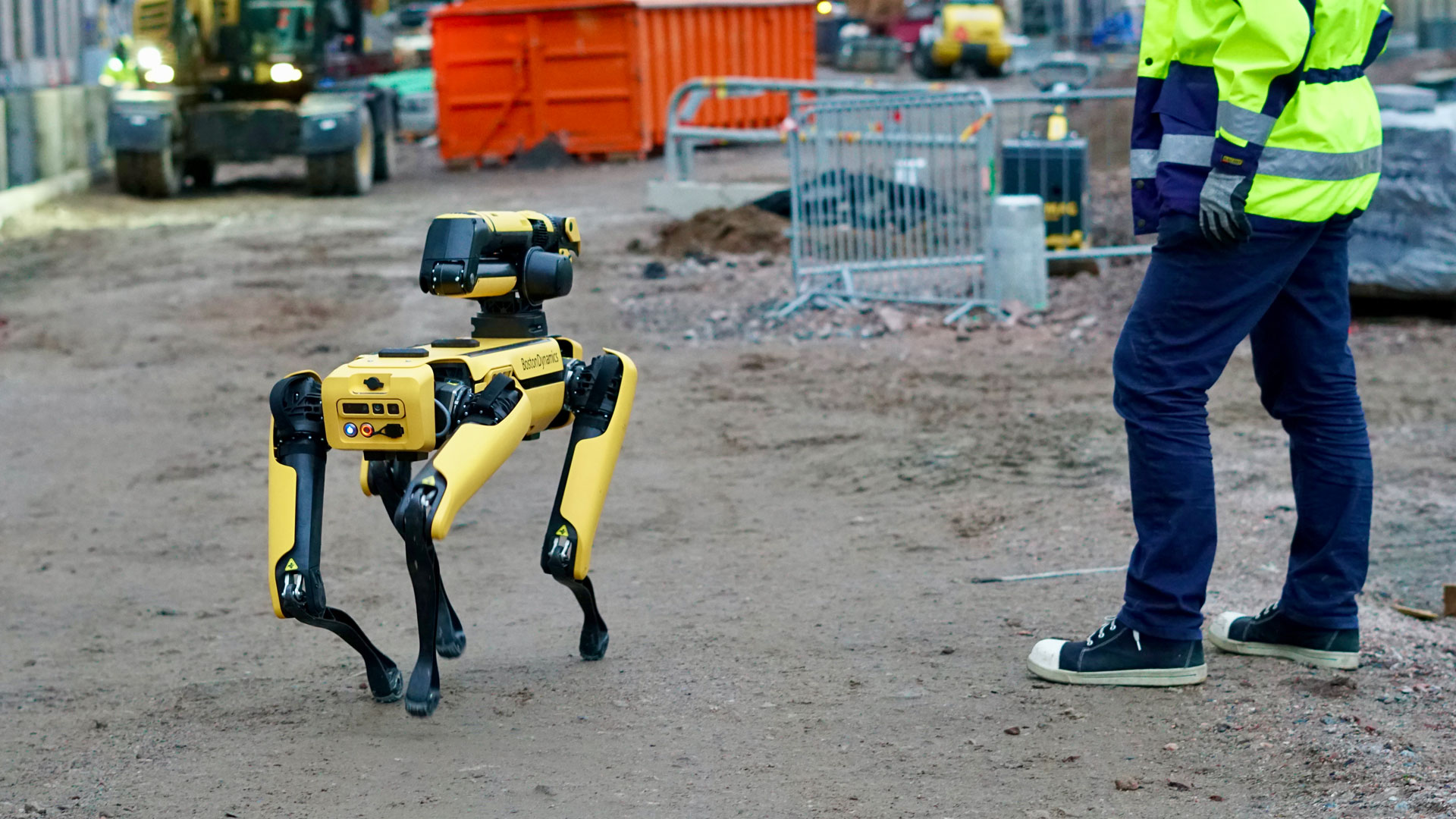
There are already autonomous robots on construction sites, for example, collecting data. But the runway for robots becoming reliable, general-purpose coworkers is still long.
Instead of trying to fit robots into current jobsites, we should redesign construction workflows and spaces to be ‘robot-optimized’. That way, we would see substantial performance improvements. Whether a robot looks like a human is irrelevant.
View the original article and our Inspiration here
Leave a Reply