
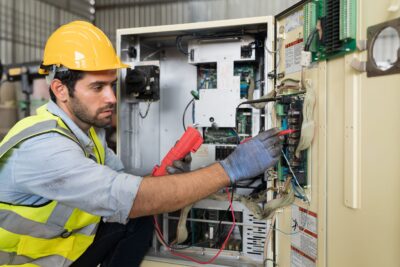
In a modern construction site, safety is often discussed in terms of hard hats, fall protection, and heavy machinery protocols. While these visible measures are vital, some of the most critical safety contributions happen behind the walls and within the complex circuitry of a building’s skeletal structure.
Electrical contractors are specialized safety architects whose expertise prevents catastrophic fires, equipment failures, and life-threatening shocks. Their role is foundational to the integrity of any project, ensuring that the invisible force of electricity remains a controlled asset rather than a volatile hazard. These certified professionals serve as the front line of defense against the inherent risks of the job site by integrating rigorous standards, advanced technology, and meticulous planning.
The Foundation of Comprehensive Risk Assessment
An electrical contractor begins their contribution long before the first wire is pulled. Their involvement starts with a comprehensive risk assessment that identifies potential hazards specific to the electrical load and environmental conditions of a project. Unlike general safety oversight, this process requires a deep understanding of how electrical systems interact with other building components. They evaluate the site for risks such as arc flash potential, proximity to water sources, and the structural integrity of existing grounding systems.
By mapping out these vulnerabilities during the pre-construction phase, contractors can design mitigation strategies that are baked into the project’s DNA. This proactive approach ensures that safety is a constant state of operation that guides every subsequent installation step.
The complexity of these assessments highlights why professional oversight is non-negotiable. To guarantee that these evaluations are performed with the highest level of accuracy and safety, it is essential to hire a reputable Fort Myers electrical contractor or one in your area who possesses the specialized tools and local expertise required for best results.
Implementing Advanced Grounding and Bonding Protocols
In simple terms, grounding provides a safe path for excess electricity to return to the earth, while bonding ensures that all metal components of a building are connected to prevent dangerous voltage differences. When these systems are installed correctly, they significantly reduce the risk of electrocution for both construction workers and future occupants.
An expert contractor understands that grounding isn’t a one-size-fits-all task. It requires calculating soil resistivity and ensuring that the electrical return path is robust enough to handle a surge without failing. Contractors eliminate the stray voltage that often leads to accidents in industrial and residential settings alike by obsessing over these hidden connections,
Strategic Management of Temporary Power Systems
Construction sites are fluid environments where power needs change daily. Electrical contractors are responsible for designing and maintaining the temporary power systems that fuel cranes, power tools, and site lighting. This is a critical safety function because poorly managed temporary power is a leading cause of site fires and trip hazards.
Professionals in this field ensure that all temporary panels are weatherproofed, that GFCI (ground fault circuit interrupter) protection is strictly enforced, and that cabling is routed in a way that avoids mechanical damage from heavy traffic. Superior project management ensures these systems are delivered on time and configured to meet evolving site demands. These experts maintain a clean and organized temporary power grid to prevent the chaotic “web” of extension cords that often characterizes unsafe job sites, protecting every trade worker on the premises.
Specialized Expertise in Arc Flash Prevention
Perhaps the most dangerous event on a construction site is an arc flash, which is a phenomenal release of energy caused by an electrical fault. Electrical contractors contribute to safety by performing detailed coordination studies and arc flash analyses to determine the exact level of personal protective equipment (PPE) required for anyone working on energized equipment. They install specific labels on electrical gear that communicate these risks clearly to anyone on site. Furthermore, they utilize modern technologies like current-limiting fuses and remote racking systems that allow technicians to operate breakers from a safe distance.
This specialized knowledge transforms a high-risk environment into a controlled setting, ensuring that even if a fault occurs, the energy is contained and the human cost is minimized.
Rigorous Compliance and Quality Assurance Testing
Beyond the physical labor, electrical contractors act as the primary enforcers of the National Electrical Code (NEC) and OSHA regulations. Their contribution to safety is cemented through a series of rigorous tests, such as insulation resistance testing and thermal imaging, conducted before a system is ever energized. Thermal imaging, in particular, allows contractors to see heat signatures that indicate loose connections or overloaded circuits that are invisible to the naked eye. By identifying these “hot spots” early, they prevent electrical fires before they can start.
This commitment to quality assurance ensures that the building isn’t only safe on the day of the ribbon-cutting but remains stable for decades to come. Their signature on a compliance document is a guarantee that the invisible infrastructure of the building meets the highest possible safety benchmarks.
Conclusion
The presence of a qualified electrical contractor on a construction site is the ultimate safeguard against the unpredictable nature of electricity. Through their deep technical mastery and commitment to excellence, they create a protective shield that encompasses the entire workforce. From the initial risk assessment to the final thermal scan, their work ensures that power is delivered reliably and safely.
View the original article and our Inspiration here
Leave a Reply