
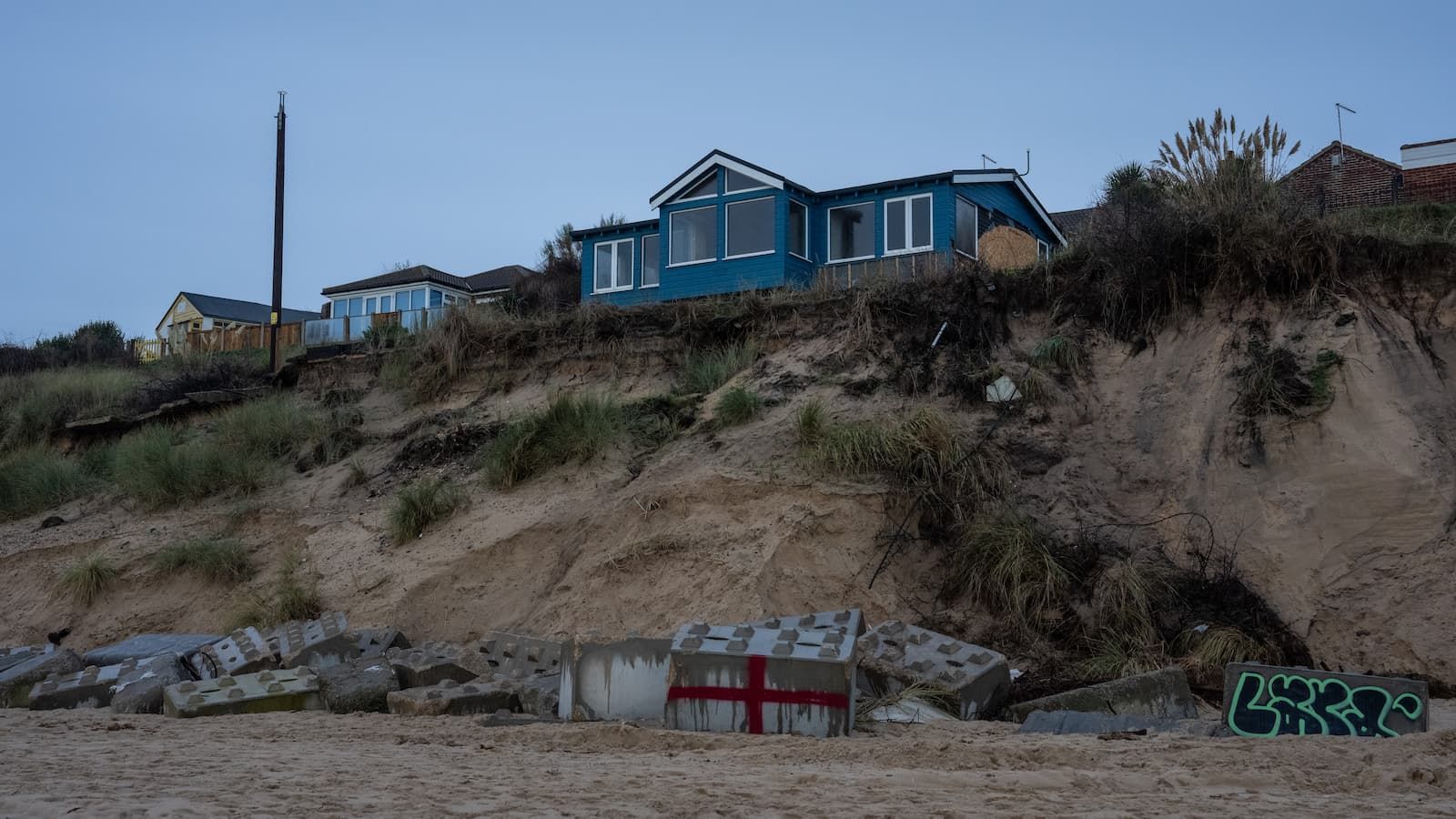
Fourteen homes perched atop soft cliffs at Hemsby in Norfolk have been warned they face “imminent collapse” onto the beach after recent storms eroded more than 10 m of land this week.
Residents have been told to leave their coastal homes, especially overnight this weekend, as cliff falls are expected, with more than 36 houses already lost in recent years.
Local officials are scrambling to support owners and stress that coastal erosion – made worse by climate change – continues to threaten the village’s future.
Council warns of extreme erosion and safety risks
Great Yarmouth Borough Council has repeatedly stressed that the rate of erosion at Hemsby is exceptionally high, describing the area as “one of the fastest eroding coastlines in northern Europe.”
A council spokesperson said recent storms, including Storm Goretti, have pushed some properties into “an even more precarious position,” and that safety is the top priority.
Officials have been liaising with affected homeowners for some time, but have now been forced to escalate warnings and urge people not to stay in clifftop homes – particularly overnight – because of the real risk of collapse identified by coastal experts.
The council also urged people to stay well clear of the dune face and take heed of warning signs where parts of the beach have been closed for safety reasons.
What residents have been told
Residents on The Marrams and Fakes Road – the streets most affected – have been told their properties may need to be demolished before they fall into the sea.
The council’s housing team has been present in the village offering support and advice on safety and the options available during this difficult period.
Homeowners are being urged to heed evacuation instructions and not to occupy homes overnight as weather conditions worsen over the weekend. Officials emphasise the emotional toll of the situation but insist that doing nothing is not an option given the rate at which the cliffs are receding.
Ongoing erosion and future challenges
The erosion at Hemsby is not just a short-term event. Over the past decade, storms and rising seas have steadily eaten into the soft sand and clay cliffs, with more than 36 properties already demolished or lost to the sea since 2013.
Great Yarmouth Borough Council has been taking several steps to manage the crisis. They secured planning permission for a 1.3km rock berm to provide partial coastal defence, though full funding from the Environment Agency is not currently available. In March 2023, the council obtained emergency government funding to build a temporary 100m granite rock berm, installing almost 2,000 tonnes of rock to slow erosion.
Looking ahead, the council is working with Coastal Partnership East through the Resilient Coasts project, a government-backed initiative that will explore financial support for communities, adaptation options, and potential national policy changes.
The council says it will continue engaging directly with homeowners to explain risks, advise on safety measures, and help plan for property relocation or demolition where necessary. Officials emphasise that while permanent coastal defence may be limited, resident safety and clear guidance on options are the top priority.
View the original article and our Inspiration here
Leave a Reply