
Before construction ever starts, there’s a moment where a site looks quiet and unchanged. No equipment running. No materials delivered. Just land that seems ready. That’s usually when people assume the hard part hasn’t begun yet.
In reality, this is where a lot of problems either get solved or quietly created.
Trees are often the reason. Not because they’re in the way in an obvious sense, but because they affect things people don’t always notice right away. Access routes. Soil stability. Visibility. Safety margins. Once construction starts, those details matter more than anyone expects.
On undeveloped land, trees can hide uneven ground, unstable soil, or root systems that spread farther than planned. On existing commercial or residential properties, mature trees may already be interacting with utilities, pavement, or structures. Ignoring them doesn’t make them less of a factor. It just delays the consequences.
Trees Don’t Respect Construction Timelines
One of the biggest misconceptions is that trees can simply be “dealt with later.” In practice, that rarely works.
Roots don’t pause for excavation schedules. Once digging begins, they can interfere with foundations, trenching, and drainage. Overhead limbs don’t adjust themselves around machinery. If they’re too close, they limit movement and increase risk. Dead or weakened trees may stand for years without issue, then become unstable the moment nearby soil is disturbed.
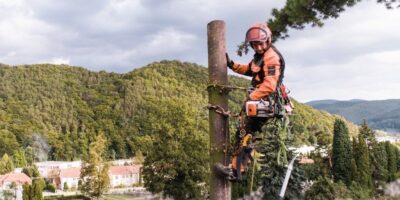
This is why experienced teams bring in professional help early. Reliable tree services look at a site with long-term impact in mind, not just immediate clearance. They assess which trees are safe to keep, which need trimming to allow equipment access, and which pose enough risk to justify removal before work begins.
Those decisions are much easier to make before construction is underway.
Safety Isn’t Abstract on a Job Site
Construction sites already carry enough risk without adding unpredictable elements. Trees can introduce hazards in ways that aren’t always obvious until something goes wrong.
A weak limb doesn’t need a storm to fall. Soil movement can cause leaning trees to shift suddenly. Dense growth can block sightlines, making it harder for equipment operators to see workers nearby. These aren’t hypothetical issues. They’re the kind of problems that slow projects down, or worse.
Professional crews approach tree work with safety as the priority, not speed. They control how trees are removed or trimmed, manage debris carefully, and coordinate with other teams on site. When the work is done correctly, the site is not just clearer, but noticeably safer to work on.
That difference shows up quickly once heavy equipment starts moving.
Planning for More Than Just the Build
There’s also the regulatory side of tree management, which tends to catch people off guard. Many local jurisdictions have rules about tree preservation, protected species, or environmental impact. Missing those details can cause delays that no one budgeted for.
Experienced tree services professionals understand how these requirements affect real projects. They know when permits are needed, what documentation matters, and how to approach tree work without triggering compliance issues later.
And planning doesn’t end when construction does.
Trees that remain on the property continue to grow. Roots expand. Canopies spread. Over time, they interact with walkways, parking areas, buildings, and utilities. Ongoing monitoring and maintenance help prevent future conflicts before they turn into safety or liability concerns.
Why This Step Is Easy to Overlook
Tree management isn’t flashy. It doesn’t look like progress in the way framing or concrete does. That’s why it’s often treated as a secondary concern.
But when it’s skipped or rushed, the effects ripple through the entire project. Delays. Redesigns. Safety adjustments that could have been avoided. What felt like a minor detail early on becomes a recurring issue later.
Handled properly, tree management becomes almost invisible. The site functions the way it should. Crews move efficiently. Equipment has room to operate. Safety risks are reduced before anyone has to react to them.
That’s the goal of good site preparation. Not just clearing land but understanding how everything on that land affects the work ahead.
Trees are part of that equation whether people plan for them or not. Addressing them early doesn’t just make construction easier. It makes the finished property safer, more functional, and far less likely to develop problems that trace back to decisions made at the very beginning.
View the original article and our Inspiration here
Leave a Reply