
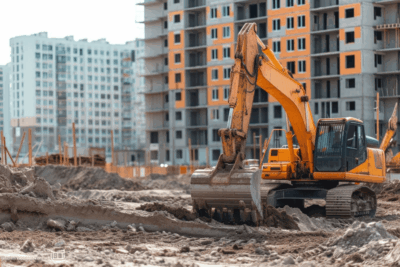
Construction sites have always depended on human effort. For generations, progress was measured by how much physical work a crew could complete in a day. While skill and experience remain central to modern construction, the way labor is applied has changed significantly. Today’s jobsites are increasingly defined by mechanical advantage rather than sheer physical output. That shift often starts during planning, when contractors evaluate repetitive, force-intensive tasks and consider how capacity, consistency, and safety will be managed. In those early discussions, it is no longer unusual for solutions like a 32 ton log splitter to come up alongside other high-capacity equipment, not as a focal point, but as part of a broader strategy to reduce strain and stabilize workflows.
This evolution reflects a deeper change in how construction professionals think about productivity. Mechanical systems are no longer seen as optional enhancements. They are becoming integral to how work is organized, scheduled, and sustained across the lifespan of a project.
The Limits of Manual Labor on Today’s Jobsites
Manual labor has clear advantages. It is flexible, responsive, and often faster to deploy in short bursts. However, modern jobsites expose its limitations more quickly than ever. Projects are larger, schedules are tighter, and safety expectations are higher. Repetitive tasks that once relied on endurance now reveal inefficiencies when performed at scale.
As construction timelines compress, relying solely on physical effort introduces variability. Fatigue affects output, consistency drops, and the risk of injury increases. What might be manageable for a single task becomes problematic when repeated day after day. This reality has pushed contractors to rethink where manual labor makes sense and where mechanical advantage offers measurable benefits.
Mechanical Advantage as a Planning Principle
Mechanical advantage is often misunderstood as simply adding power. In practice, it is about redesigning work so force is applied efficiently and predictably. This begins at the planning stage, long before equipment arrives on site.
Contractors increasingly assess tasks based on repetition, force requirements, and duration. Tasks that involve sustained pressure, heavy materials, or repeated cycles are prime candidates for mechanical support. By identifying these early, teams can design workflows that reduce bottlenecks and improve pacing without increasing headcount.
This approach aligns with a broader trend in construction management toward system-based thinking. Work is no longer evaluated task by task, but as part of an interconnected process where consistency matters as much as speed.
Reducing Variability in Output
One of the most significant advantages of mechanical systems is their ability to reduce variability. Human performance naturally fluctuates based on fatigue, conditions, and experience. Mechanical systems, when used correctly, provide consistent output regardless of these factors.
Consistency simplifies scheduling. When output is predictable, downstream tasks can be planned with greater confidence. Crews spend less time waiting for prerequisites to be completed and more time executing coordinated work. Over the course of a project, this reliability can have a substantial impact on timelines and costs.
Safety as a Driver of Mechanization
Safety considerations play a central role in the shift toward mechanical advantage. According to the Occupational Safety and Health Administration, overexertion and repetitive motion injuries remain among the most common causes of non-fatal workplace injuries in construction. These injuries often develop gradually, making them harder to prevent without structural changes to how work is performed.
Mechanical systems reduce exposure to these risks by minimizing repetitive force and heavy lifting. While they do not eliminate hazards entirely, they shift risk management toward planning, training, and oversight rather than endurance. This shift supports safer worksites without compromising productivity.
Matching Capacity to Real-World Demands
One challenge contractors face is accurately matching capacity to workload. Undersized solutions can slow progress and increase wear on both people and equipment. Oversized solutions, if poorly integrated, can introduce inefficiencies of their own.
The move toward mechanical advantage encourages a more nuanced approach. Capacity is evaluated based on peak demand rather than average conditions. This ensures that systems perform reliably during the most demanding phases of a project, not just under ideal circumstances. Over time, this approach reduces downtime and maintenance issues.
Mechanical Systems and Workforce Sustainability
Beyond immediate productivity gains, mechanical advantage supports workforce sustainability. Construction labor shortages have made retention and long-term health more critical than ever. Reducing unnecessary physical strain helps extend careers and maintain experienced crews.
When tasks are designed to be repeatable without excessive fatigue, workers can focus on precision, coordination, and problem-solving. These skills add far more value to a project than raw physical output. Mechanical systems free workers to apply expertise where it matters most.
Integration Without Overdependence
The shift toward mechanical advantage does not mean eliminating manual labor. Effective jobsites balance both. Manual work remains essential for tasks requiring fine control, adaptability, and judgment. Mechanical systems support these efforts by handling force-intensive or repetitive components.
Successful integration depends on training and workflow design. Equipment must be used intentionally, with clear roles defined for both machines and operators. When integrated thoughtfully, mechanical systems enhance human capability rather than replacing it.
Long-Term Operational Benefits
The benefits of mechanical advantage extend beyond individual projects. Contractors who standardize capacity-based workflows gain institutional knowledge. They learn which tasks benefit most from mechanization and how to deploy systems efficiently across different site conditions.
This knowledge compounds over time, improving estimating accuracy and reducing surprises. Projects become more predictable, and crews develop confidence in their processes. These operational benefits contribute directly to competitiveness in an increasingly demanding market.
A Shift in How Progress Is Measured
Perhaps the most important change is philosophical. Progress on modern jobsites is no longer measured solely by visible effort. It is measured by consistency, safety, and the ability to sustain output over time.
Mechanical advantage represents a shift from reactive labor to intentional systems. It reflects a construction industry that values planning as much as execution and recognizes that smarter force application leads to better outcomes. As jobsites continue to evolve, this balance between human skill and mechanical support will define the next era of construction efficiency.
Feature Image from Freepik
View the original article and our Inspiration here
Leave a Reply