
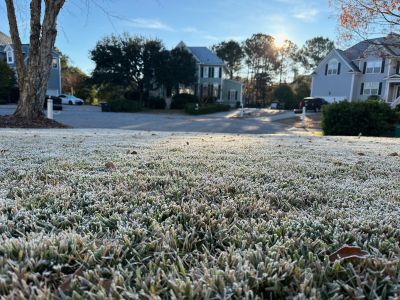
Preparing your lawn and plants for freezing weather is essential to minimize frost damage, protect plant health and ensure your landscape survives the winter. By taking a few key steps before the cold sets in, you can shield your lawn and garden from the harsh effects of freezing temperatures and promote healthier growth when spring arrives.
Image Courtesy of: Sod Solutions
Adjust Your Mowing Habits
One of the first steps in preparing your lawn for a freeze is adjusting your mowing habits. As temperatures drop, gradually reduce the mowing height, leaving the grass at about 2 to 2.5 inches tall before the first freeze. This taller grass helps protect the roots from freezing while promoting a deeper root system, which improves stress tolerance.
It is also crucial to avoid mowing frozen turf. Mowing while the grass is frozen can cause significant damage, and maintaining a slightly higher mowing height creates a warmer micro-environment, reducing the risk of cold injury.
Aerate for Better Root Protection
Aerating your lawn is another key step in preparing for freezing weather, but it’s important to know which type of grass benefits from this. Aeration is ideal for cool season lawns, such as Kentucky bluegrass or fescue, because these grasses are still growing and can recover well before winter. Aerating cool season lawns improves water and nutrient absorption, preventing surface water from freezing and compacting the soil.
However, avoid aerating warm season lawns like bermuda or St. Augustine in the fall. These grasses are not actively growing during cooler months, and aerating them at this time can stress the grass further, as it won’t recover properly before winter. For warm season lawns, aeration is best done in late spring or summer when the grass is actively growing. Removing lawn debris is essential as freezing temperatures approach.
Clear Debris from the Lawn
Leaves, twigs and other debris can trap moisture, which encourages fungal growth during cold conditions. Regularly raking and clearing your lawn of debris can prevent this from happening and keep the grass healthy.
Apply Winter Fertilizer
After aerating, applying a winter fertilizer, like Lawnifi Maintain in the Fall Fertilizer Box, to further protect your lawn. Potassium strengthens the roots and helps them become more resilient to freezing temperatures. A slow-release fertilizer is ideal for maintaining the health of the grass through winter dormancy. Fertilizing in early to mid-fall ensures that the nutrients are absorbed before the ground freezes. This step gives the grass the strength it needs to withstand cold weather and promotes faster recovery in spring.
Manage Watering Carefully
Watering your lawn and plants properly before freezing weather is crucial. Water deeply ahead of the freeze to ensure the soil has enough moisture to insulate the roots. Well-watered soil stays warmer than dry soil and helps protect the roots from freezing.
However, avoid watering in certain conditions. Do not water if the ground is already frozen, during a hard freeze (when temperatures drop below 25 degrees Fahrenheit for four hours), or when temperatures are below 40 degrees Fahrenheit, as this can cause ice buildup and damage to the plants.
Protect Plants and Pipes
In addition to lawn care, protecting your plants is essential in freezing weather. Potted plants should be brought indoors or moved to a sheltered location to prevent them from freezing. For tender outdoor plants, covering them with breathable materials such as frost cloths or blankets will shield them from frost and freezing temperatures. Another effective measure to protect both plants and lawn is mulching. If you have any exposed outdoor pipes, it’s important to insulate them before freezing weather strikes. Frozen pipes can burst, leading to costly repairs.
Mulch for Insulation
Mulching is another effective way to protect your plants and lawn from freezing weather. Apply a layer of mulch around trees, shrubs and garden beds to insulate the soil. Mulch helps retain moisture and protects plant roots from extreme cold by creating a buffer between the soil and freezing temperatures.
For lawns, applying mulch in bare patches or particularly vulnerable areas can add an extra layer of protection. Mulch also helps prevent soil erosion and reduces the risk of frost penetrating deeply into the ground.
Limit Traffic on Frozen Grass
It’s important to avoid walking or driving on your lawn when it’s frozen. Frozen grass blades are fragile and more prone to breaking under pressure. Foot or vehicular traffic can cause lasting damage, leaving bare patches that will take longer to recover when spring comes.
How to Prepare Your Lawn for Freezing Weather – Answered
To prepare your lawn for freezing temperatures, start by gradually lowering your mowing height to around 2-2.5 inches, which helps protect the roots and promote deeper growth. Aerate cool season lawns, but avoid aerating warm season grasses, as they won’t recover during the colder months.
Clear debris like leaves and twigs to prevent fungal growth and ensure the lawn remains healthy. Apply a winter fertilizer rich in potassium to strengthen roots, and water deeply before a freeze but avoid watering during or just before freezing conditions.
Protect tender plants by bringing potted ones indoors and covering outdoor plants, and insulate pipes to prevent freezing. Additionally, apply mulch around plants and on bare lawn patches to protect roots and soil. Finally, avoid walking or driving on frozen grass, as it can cause long-term damage to the turf.
To view this article on Sod Solutions website, click here.
View the original article and our Inspiration here
Leave a Reply