
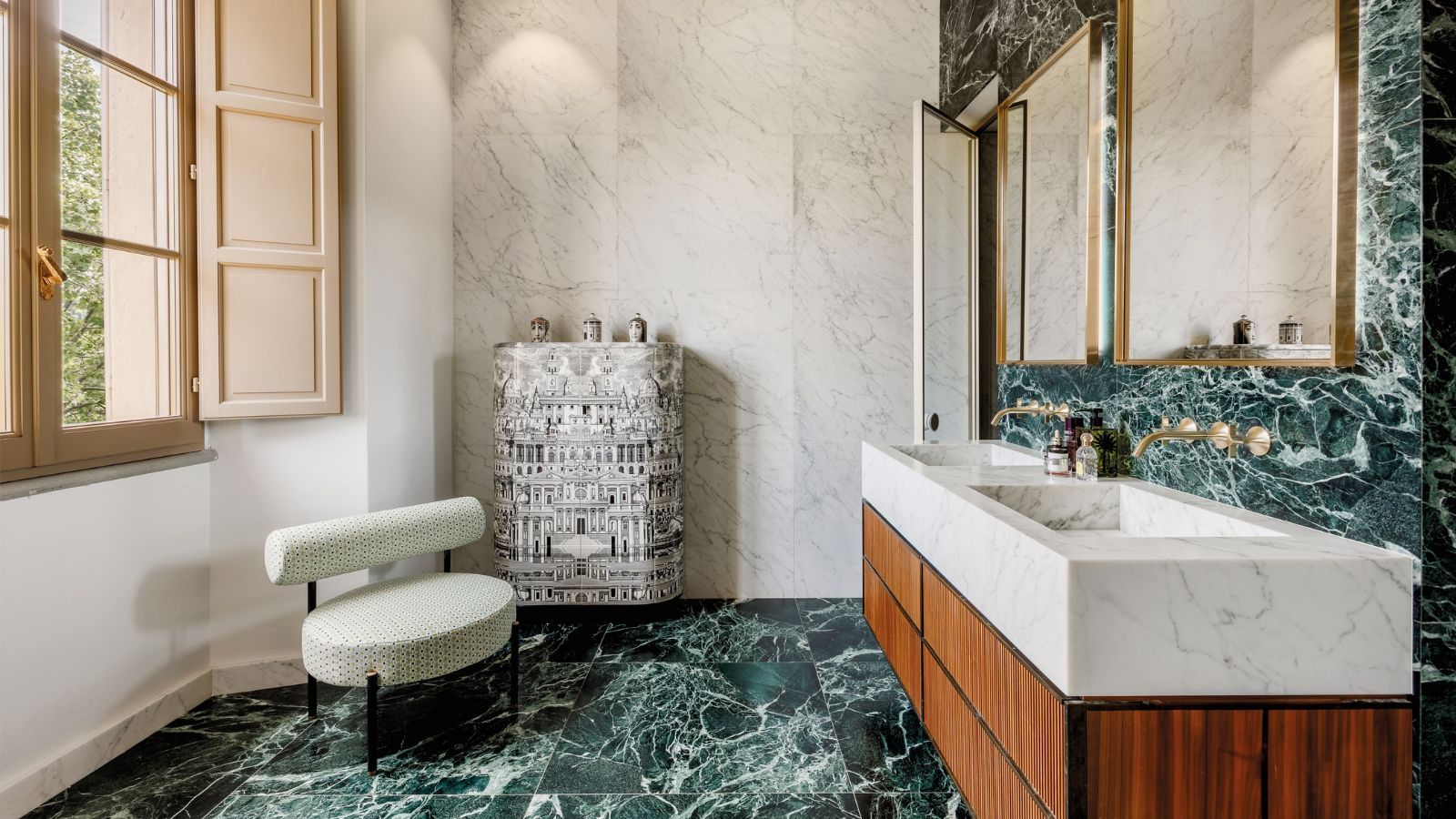
Truly luxurious bathroom design isn’t defined by one showpiece sink or a freestanding tub – it’s defined by how it makes you feel. The best rooms are quietly confident: a layout that flows, tactile surfaces that invite a closer look, and finishes chosen with intention rather than trend-chasing. These are the markers of taste you’d expect from a beautifully designed boutique suite, but tailored to the way you actually live.
Below, we share some of our favourite luxury bathroom ideas that focus on the details that move the needle. From proportions and layered lighting to materials, brassware and the finishing touches, these ideas show how to create a bathroom that feels more considered, more comfortable and unmistakably indulgent.
1. Plan ahead to create the ultimate spa-like experience at home
Anyone who’s ever lingered a little too long in a sauna – or surfaced from a long soak feeling like a new person – knows the appeal of spa life. The good news is you can borrow that same feeling at home, but it starts with getting specific about what “spa-like” means to you. Is it a deep, end-of-day bath? A calming palette? Plush towels and indulgent toiletries?
“Planning, planning, planning is key if you want to recreate a spa experience at home,” says Augustine Atobatele, interior designer and creative director at Studio Augustine. “Begin by listing what your ideal spa looks and feels like, then map out what’s possible within your bathroom. Natural materials can instantly bring a calmer, more restorative feel, but it’s also important to think through the details – from fixtures and finishes to lighting that works across the day, and ventilation that’s effective without being noisy. Most importantly, consider flow and allow enough space to move around freely without bumping into anything.”
Top tip: Build in a ‘warming moment’ with underfloor heating. “Stepping out onto warm floors is an incredible sensation,” says Augustine. “It’s also less likely to have cold spots than radiators,” helping the whole room feel consistently comfortable and far more spa-like.
Augustine Atobatele is a British-Nigerian interior designer who studied at KLC School of Design in Chelsea before founding Studio Augustine: a London-based interior design practice working on residential, commercial and hospitality projects across the UK and globally.
2. Invest in quality fixtures that will stand the test of time
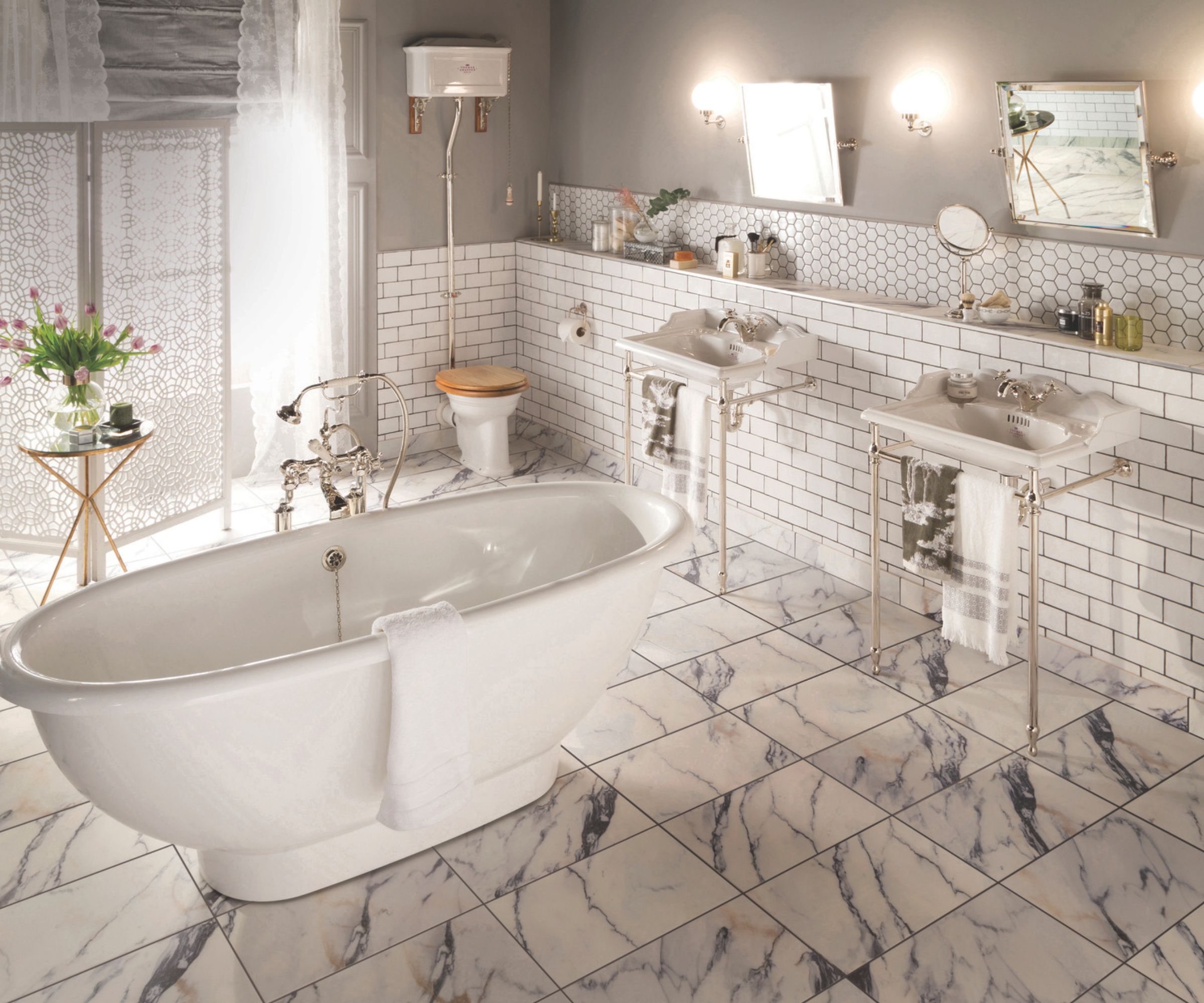
In a luxury bathroom, it’s the pieces you touch every day that matter most. Bathroom tiles and paint can be updated down the line, but your core fixtures will set the tone from the outset.
“lnvest in the core fixtures, including toilets, basins, taps, showers and heated towel rails, as these define both the look and day-to-day experience of the bathroom,” agrees Paul Dwyer, managing director at Thomas Crapper Ltd. “High-quality brassware and British-made heated towel rails in finishes such as chrome, nickel or polished brass will elevate even a simple scheme and still look good decades later.”
In short, investing in quality pays off twice: you get a bathroom that feels high-end, and you avoid the hassle (and expense) of replacing fittings that start to look tired a few years in.

Paul Dwyer is managing director at Thomas Crapper, leading the heritage British brand with a focus on timeless design, craftsmanship and high-quality bathroom fittings for modern and traditional homes worldwide.
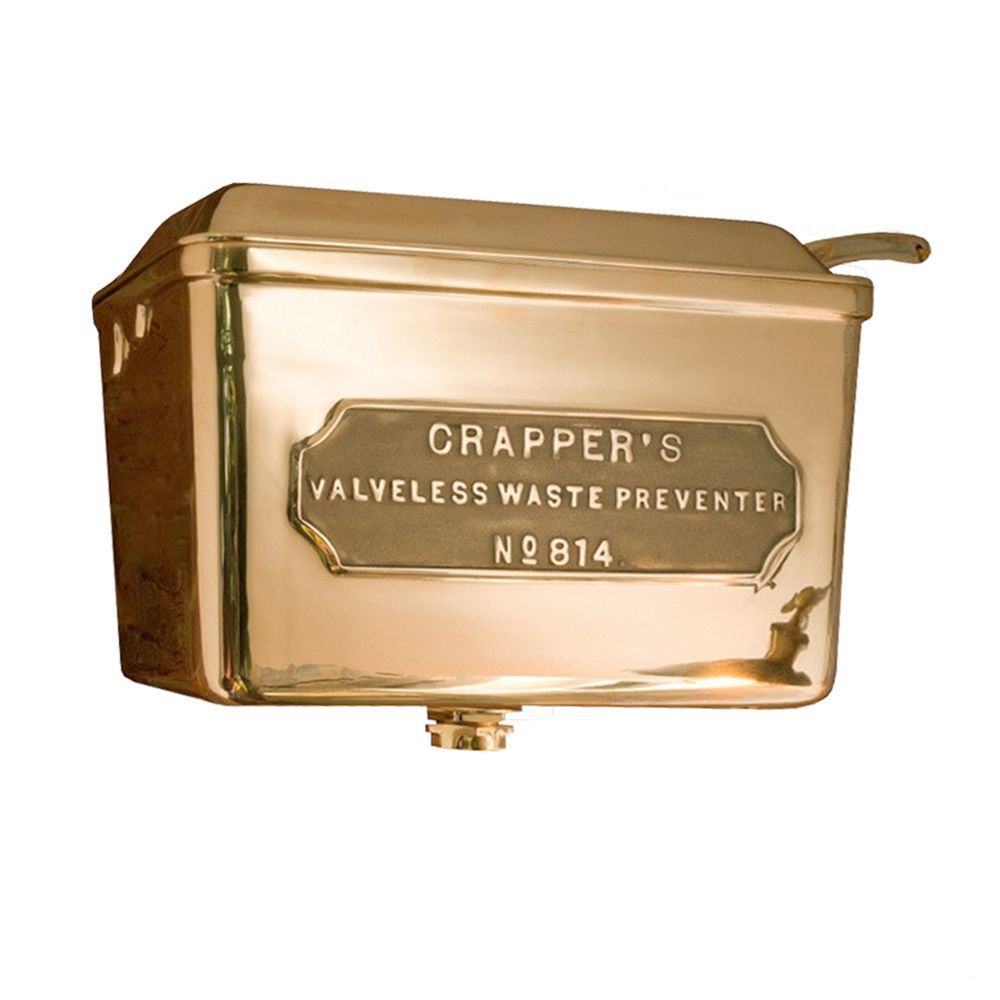
High Level Polished Brass Cistern
Cast from solid brass and polished to a luxurious burnished finish, this iconic 814 Thomas Crapper cistern is hand made in Britain, with each one taking up to 5 hours of polishing to achieve the ideal surface finish.
3. Select high quality brassware and taps
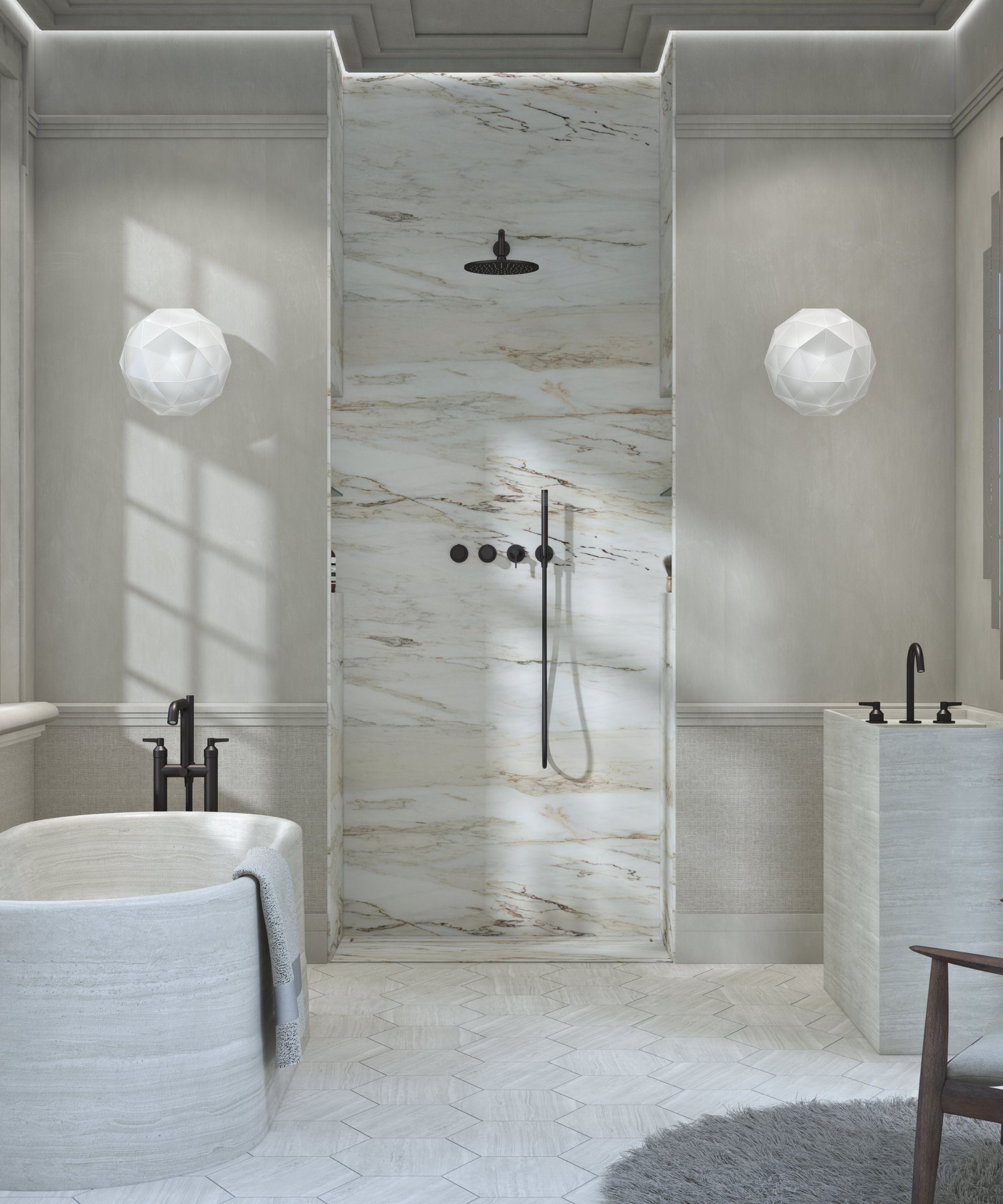
“Brassware often defines a luxury bathroom because taps and showers set both the look of the space and how it feels to use,” explains Benjamin Peak, creative director at Varied Form. “Being able to choose the shape and handle materials to suit the wider scheme is what gives a bathroom its genuinely bespoke, high-luxury character.”
His advice is to start with consistency: stick to one tap and shower silhouette throughout, then use finish choices and subtle handle details to echo the wider scheme, whether that’s wall colour, stone veining or polished plaster. He also notes that modular bathroom collections can be a smart long-term investment, as elements can be updated over time without replacing the entire installation.
And Lewis Neathey, product management lead at GROHE UK, reminds us why quality matters: “Poor quality finishes can have a greater impact than expected, with stained and tarnish hardware appearing quickly,” he explains. “Along with appearing worn, budget taps and fittings can also become squeaky over time as the internal washers harden through water damage.”

Benjamin Peak is creative director at Varied Forms, where he leads the design of configurable brassware collections, blending British design thinking with precision engineering to create modern, bespoke bathroom fittings.

Lewis Neathey is product management lead at GROHE UK, overseeing the development and positioning of bathroom and kitchen ranges, with a focus on design-led innovation, performance, and water-saving technology for modern homes.
4. Use layered lighting to evoke a luxurious atmosphere
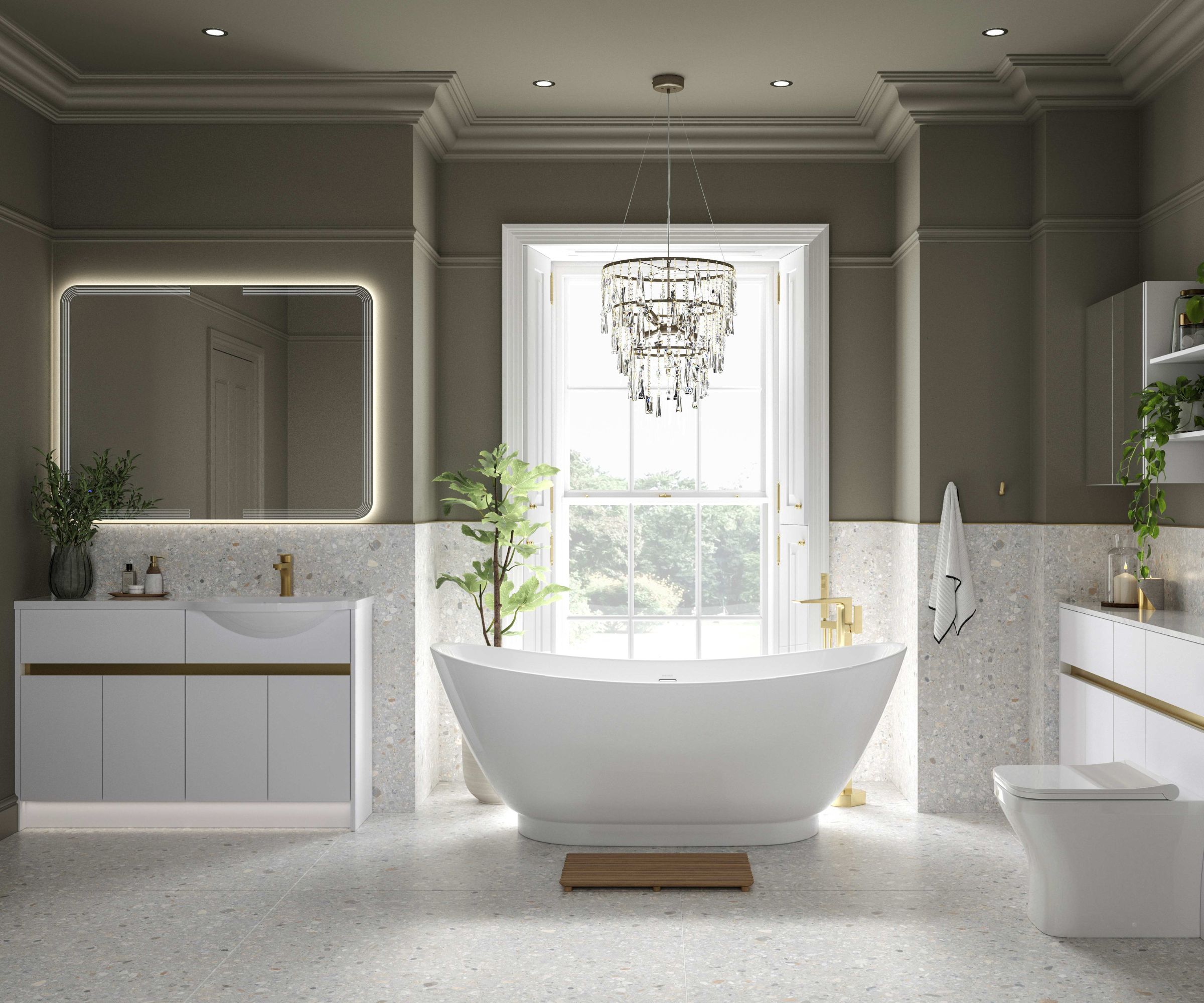
Lighting design can change everything about a space: how materials read, how flattering the mirror is, and whether the room feels serene or stark. The most polished bathrooms avoid a single, all-or-nothing ceiling fixture and instead build a soft hierarchy of light.
Most designers say start at the bathroom mirror, because this is where good illumination is felt most. Wall lights placed on either side create an even, flattering glow and immediately make the space feel more considered. Then add a lower layer for ambience, such as a subtle wash under a vanity, a toe-kick strip, or a small pool of light that skims the floor.
Top tip: Put every light on a dimmer switch (and, ideally, a separate circuit). Being able to switch from bright “get-ready” light to a soft evening glow is the fastest way to make a bathroom feel more indulgent. ·
5. Learn how to use negative space like a designer
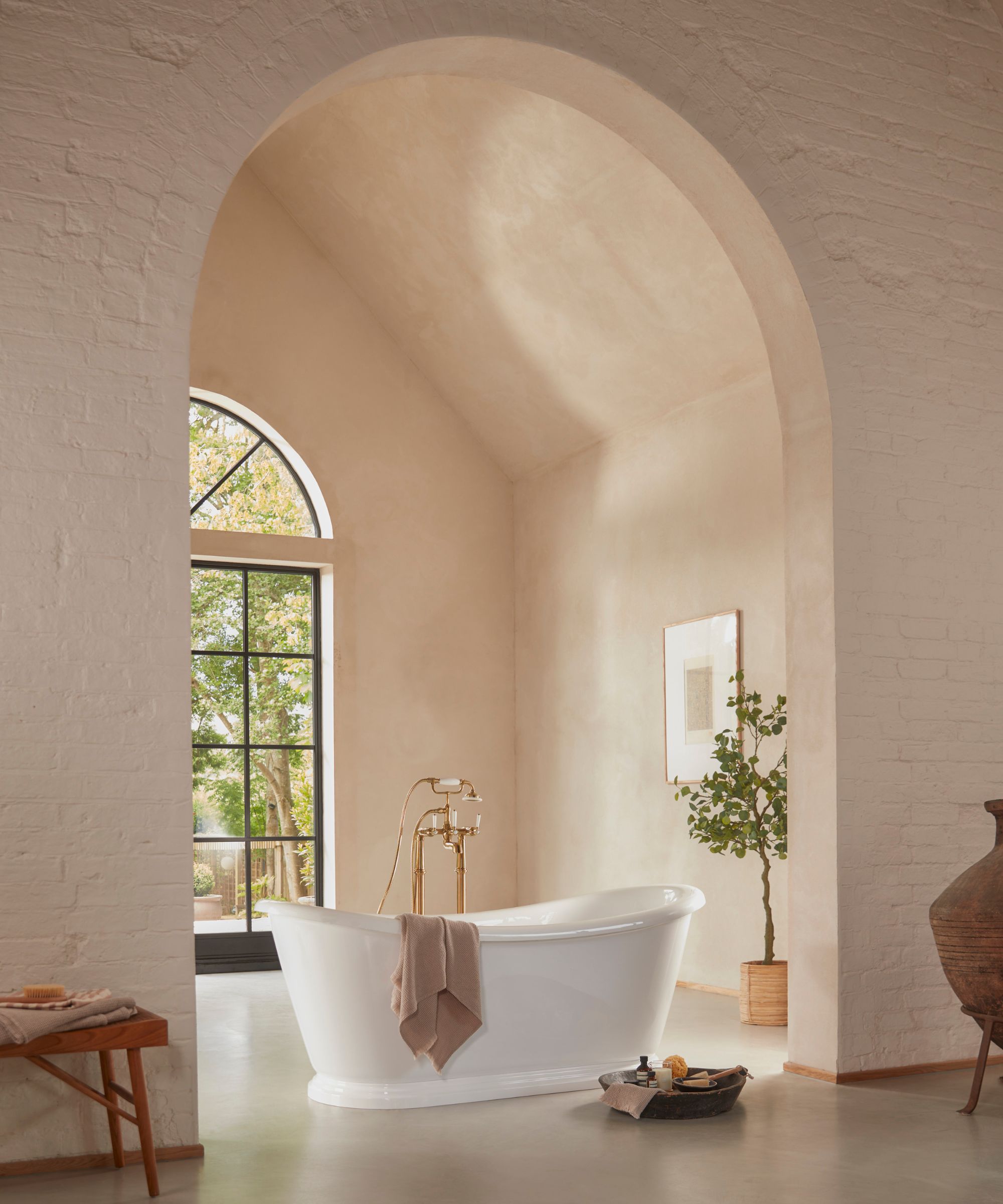
If your home is blessed with lofty proportions – a vaulted ceiling, a big picture window or an architectural quirk such as an archway – allow these to lead the layout. In larger spaces especially, it’s often the negative space that reads as luxury: clear sightlines, breathing room around key pieces, and a sense that nothing has had to be squeezed in as an afterthought.
Take the exquisite bathroom above – a Roper Rhodes bathtub sits confidently between the archway and the window, almost like a piece of sculptural artwork. The result feels hotel-level in the best possible way.
If you can frame a bathtub with a beautiful opening, a tall window, or an unexpected curve in the architecture, do it. Then keep the supporting cast understated: soft-toned walls, a single oversized plant, and bathroom lighting that flatters the height of the room. When you give great bones the spotlight, the whole space will feel more luxurious.
6. Antiques and decorative accessories have their place in bathrooms too
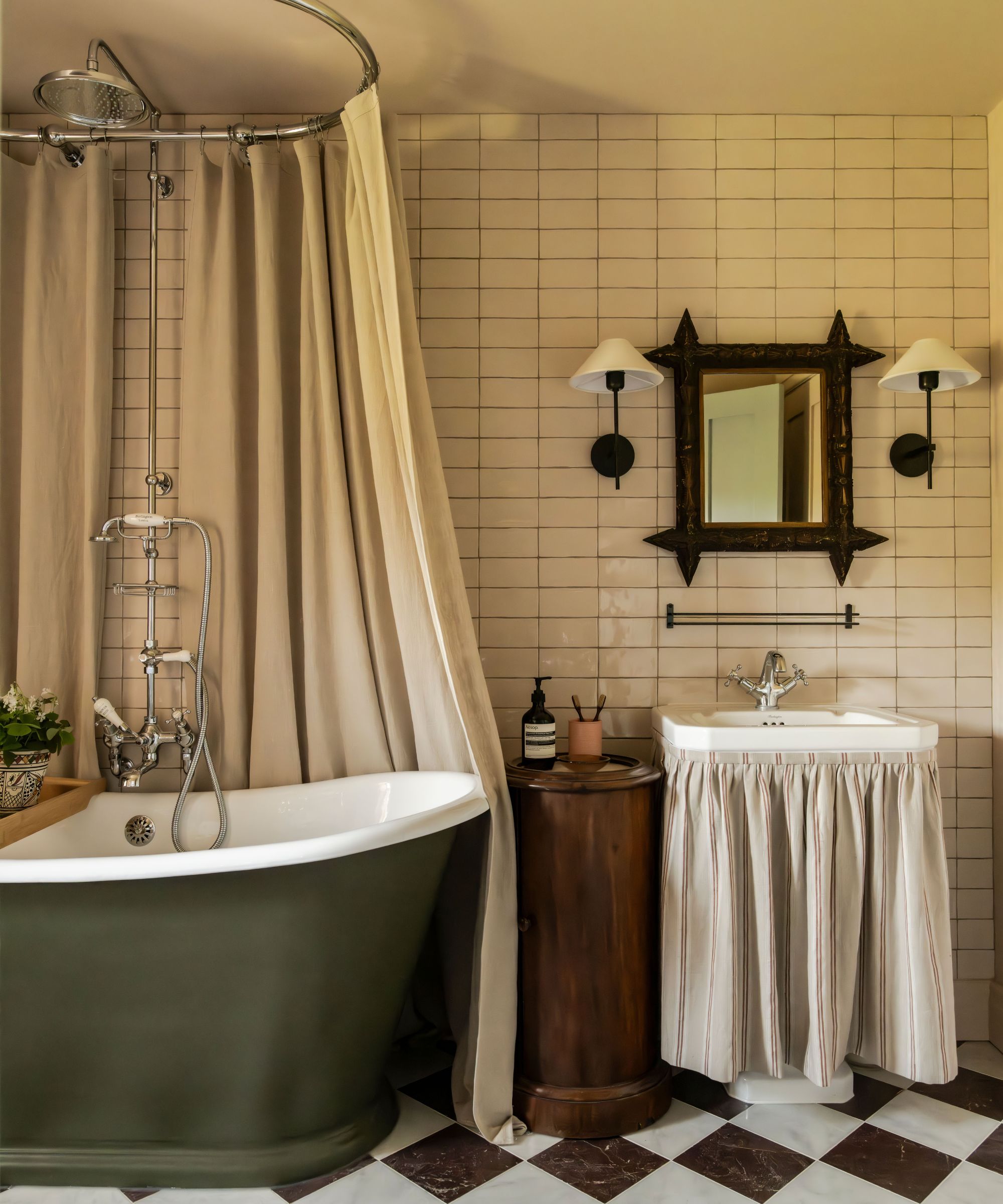
The most luxurious bathrooms rarely feel like showrooms. They have a slightly ‘collected’ quality thanks to individual pieces that bring a sense of history and personality to them. Antiques are especially good at doing this because they introduce patina and character in a way brand-new fittings simply can’t, and they aren’t only reserved for vintage style bathrooms.
While we’re not recommending bringing your family heirlooms into the most humid room of the house, try to think beyond the obvious. A vintage mirror, an old side table repurposed for bottles and candles, or a framed artwork can all make a bathroom feel more luxurious.
The bathroom above (showcased by Marlborough Tiles,) demonstrates this idea beautifully. The ornate mirror lifts the scheme, while the skirted basin adds a tailored, decorative note. Even the simple addition of a potted plant helps the space feel inviting and more personalised.
Top tip: The key here is to edit. Choose a few pieces with presence and make sure they’re happy in humid conditions (or positioned away from splashes).
7. A fireplaces is the ultimate bathroom luxury
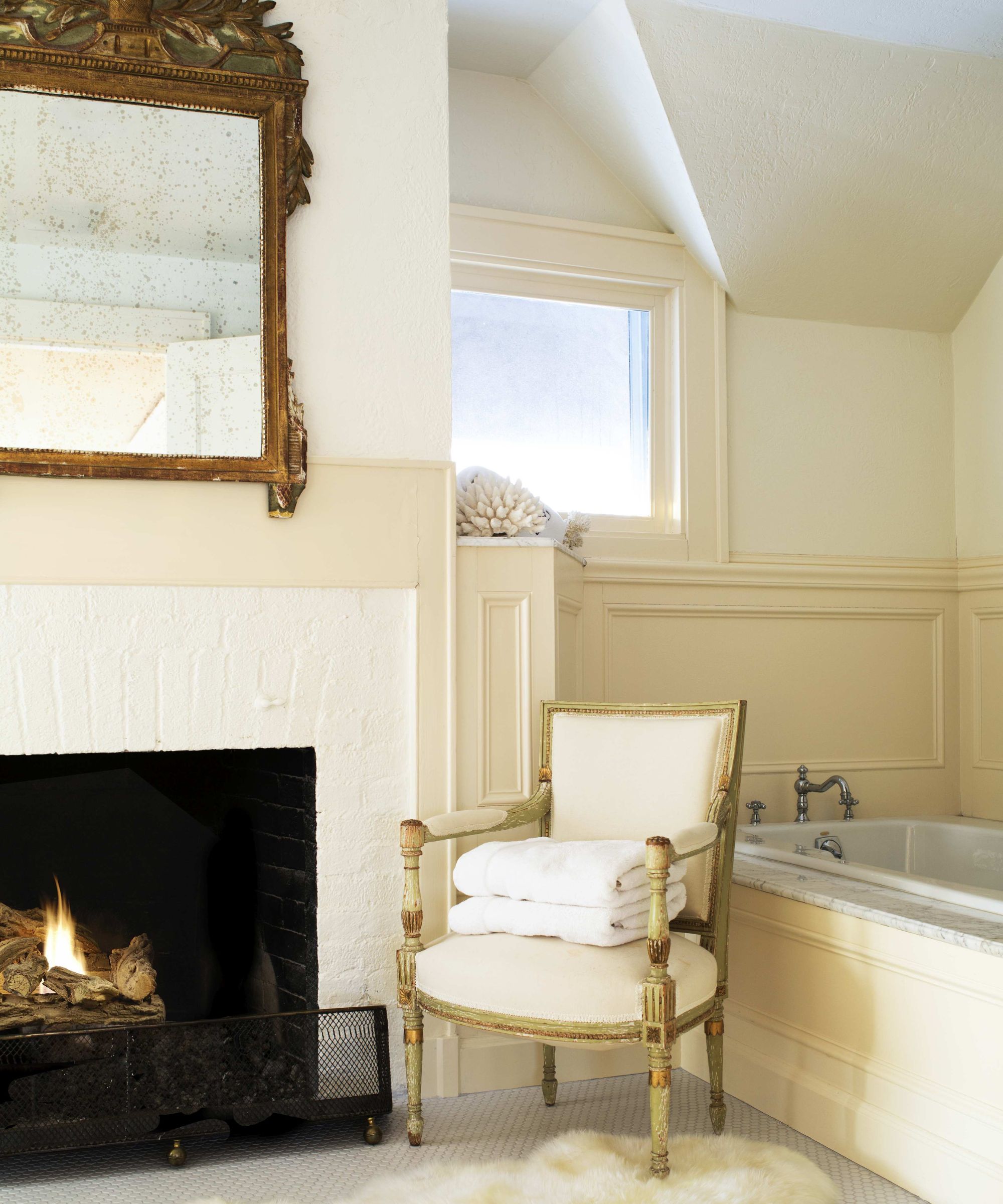
A fireplace in a bathroom instantly shifts the space into “cosy-luxury” territory. It’s the kind of cinematic comfort you’d expect in a Nancy Meyers home, where everything feels soft, warm and subtly elevated. It’s not about a grand gesture for its own sake, but about adding much-needed warmth that makes long soaks feel extra indulgent (especially in older homes, where bathrooms tend to run cooler).
That said, this is a feature that needs to be planned properly. Bathrooms are humid environments, so you’ll want to think through heat output, ventilation and materials from the outset. A real flame can be magical, but it must be installed with safety and moisture in mind.
8. Use wall-to-wall marble if budget allows
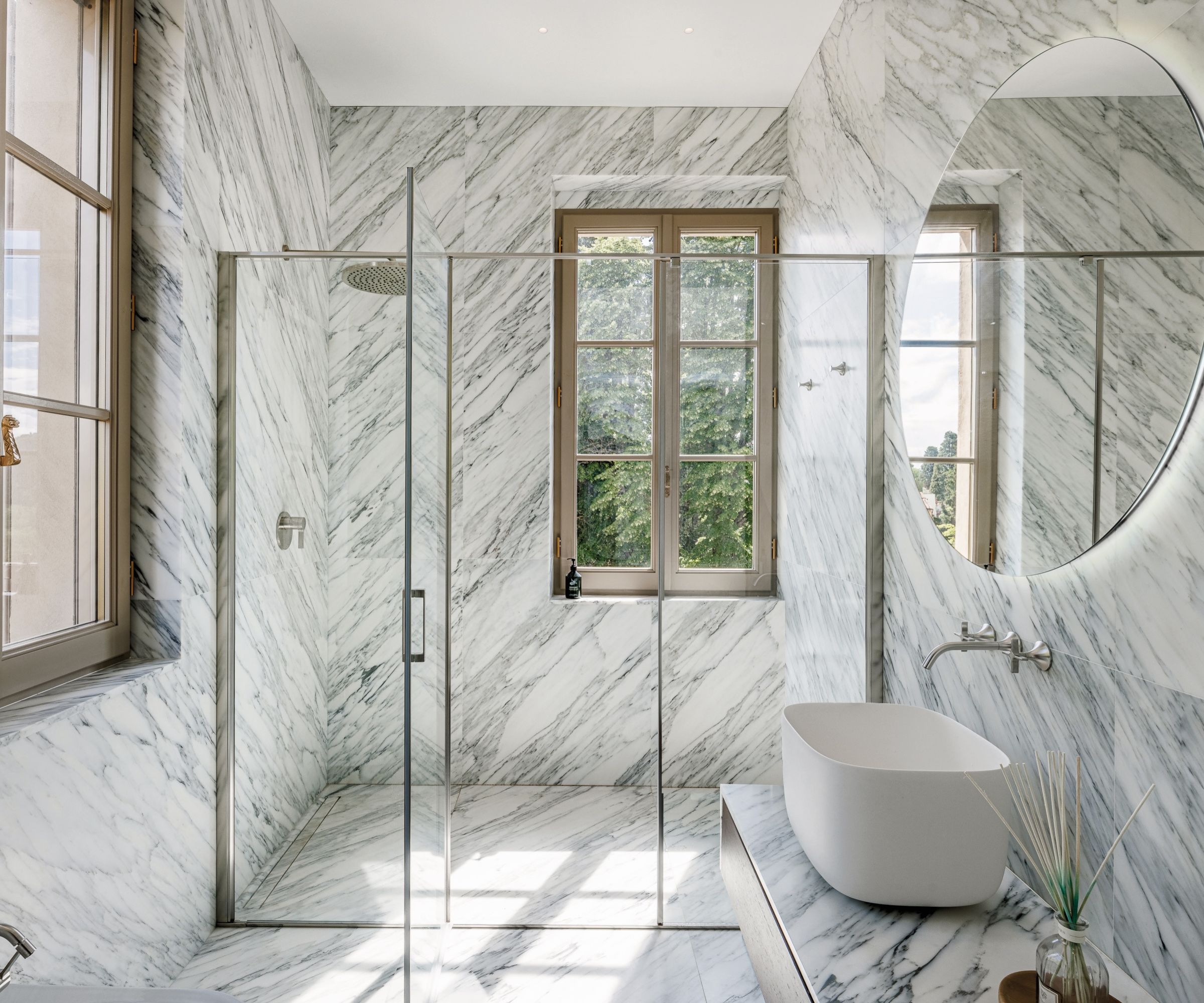
If there’s one material that instantly signals a luxurious bathroom, it’s natural marble, and using it wall to wall only amplifies the effect. Whether you opt for softly veined slabs for bathroom flooring or dramatic bookmatched walls, marble creates a sense of cohesion that makes a bathroom feel expensive before you’ve even clocked the fittings.
It’s also a finish that feels reassuringly timeless. As Paul Dwyer from Thomas Crapper Ltd points out: “A statement piece that sets the tone, such as a marble washstand, instantly gives a bathroom a sense of occasion and classic luxury.”
The trick is to keep grout lines minimal, avoid over-layering finishes, and pair marble with refined brassware and soft lighting.
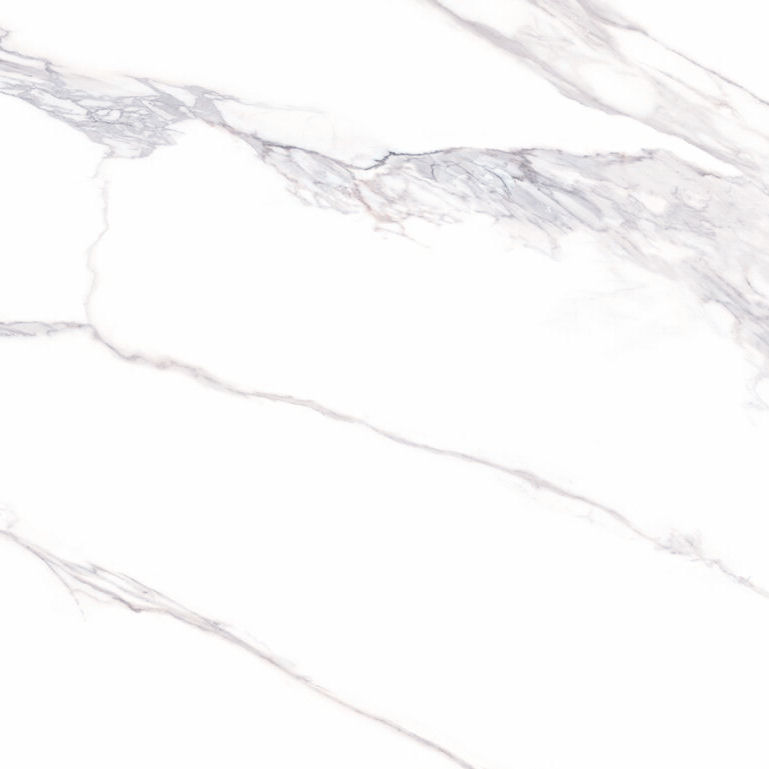
Mimica Bianco Ravenna Gold Gloss Marble Effect Porcelain Slab
This marble-effect porcelain slab pairs a pure white base with smoke-grey veining and warm gold-cinnamon tones, finished in a high-gloss sheen. Use it for walls, floors or bespoke surfaces, and consider the bookmatch pair for a mirrored feature.
9. Play with statement stone finishes
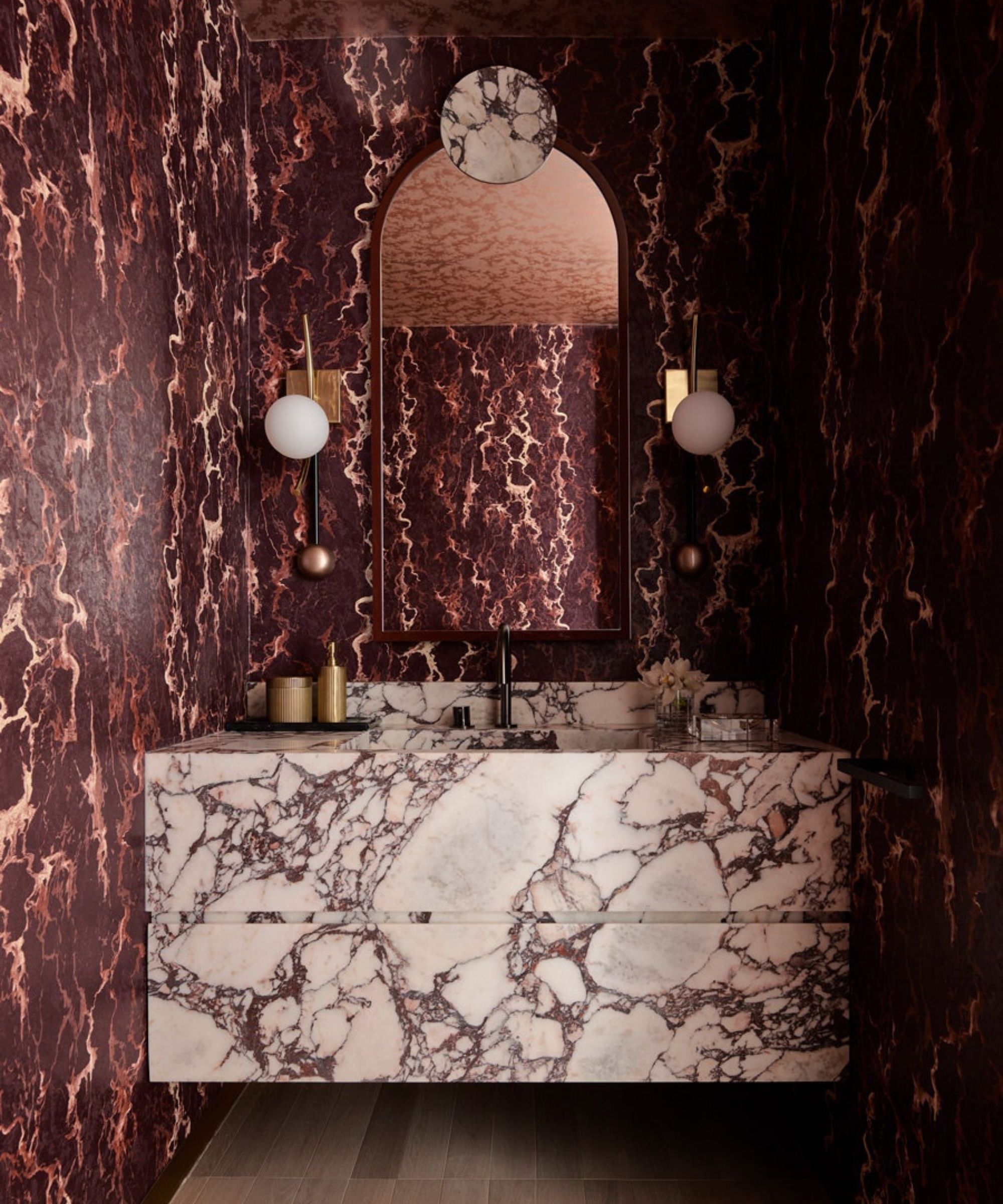
Pure white marble isn’t the only stone that can deliver a luxury look. In smaller bathrooms, making a statement is often the smartest route to luxury, and a richly veined stone vanity, dramatic granite splashback or enveloping dark stone walls can turn a compact space into something that feels extra indulgent.
Jewel-toned stone and moody finishes work particularly well in small luxury bathrooms, as they create a cocooning effect that feels confident and high-end, especially when paired with sculptural lighting, metallic finishes and a standout mirror.
That said, statement stone is also a great option if you want impact without overwhelming the room. Using it more selectively – perhaps on a single basin unit, feature wall or vanity surround – allows the material to shine while keeping the rest of the scheme pared back.
10. Try to layer a variety of textures and handcrafted finishes
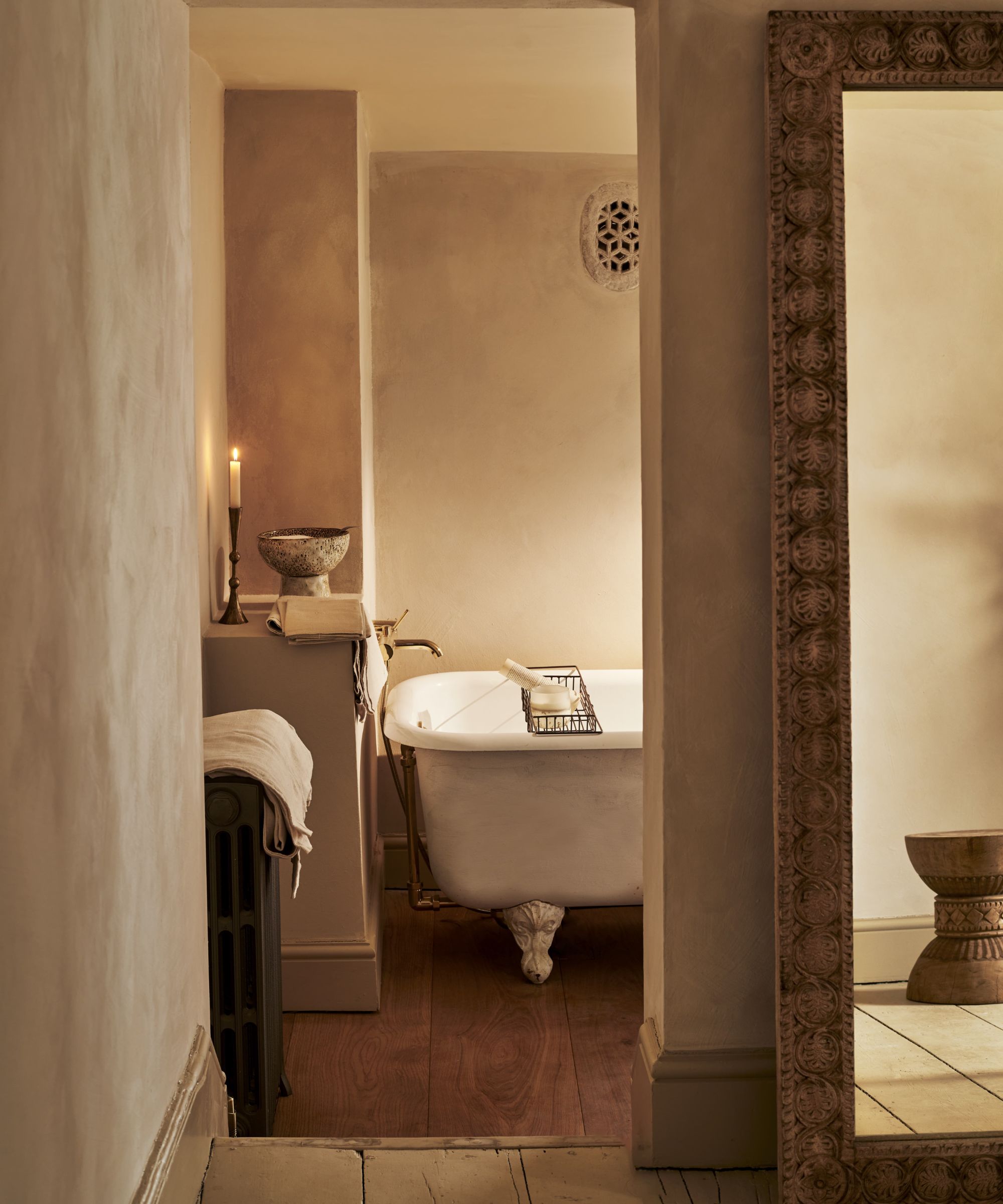
Modern bathrooms can quickly become dominated by slick, reflective finishes, which risk leaving the room feeling cold or clinical. A more considered approach is to layer in a variety of textures, choosing finishes with subtle variation and character rather than anything overly uniform.
Handcrafted tiles, for example, offer slight shifts in glaze and shape that give walls a lived-in, quietly luxurious quality. Instead of keeping every surface polished and pristine you could treat your walls with a textured plaster finish or classic panelling. Moisture-resistant bathroom wallpaper can also add pattern and personality to these spaces, making them feel more intentionally designed.
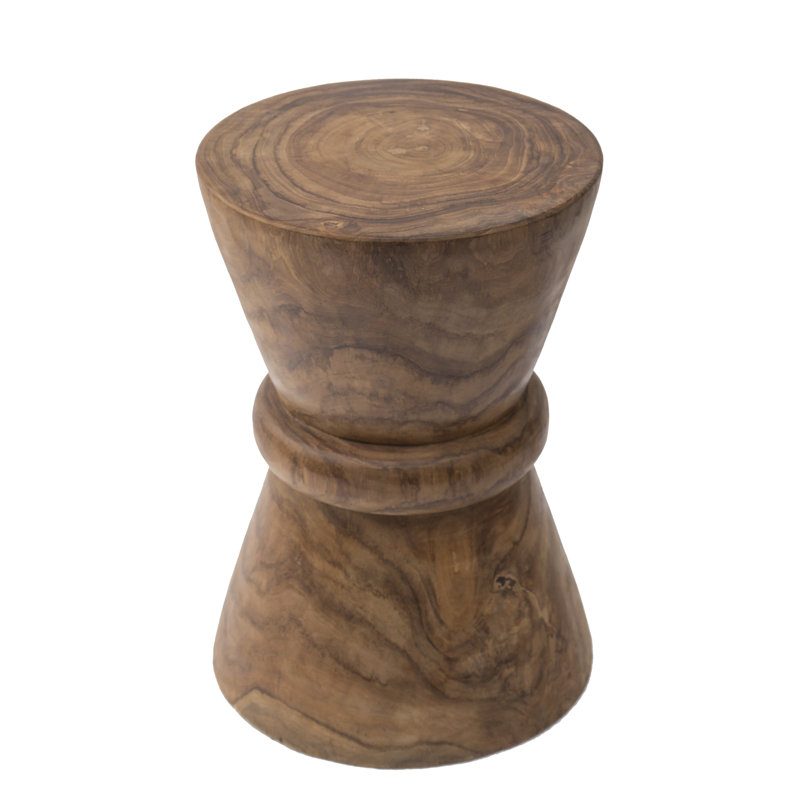
Union Rustic Oreilly Stool
This elegant stool is crafted from water-resistant rustic teak and is perfect for perching your bath-time essentials by the tub.
11. Double basins ooze luxury when done properly
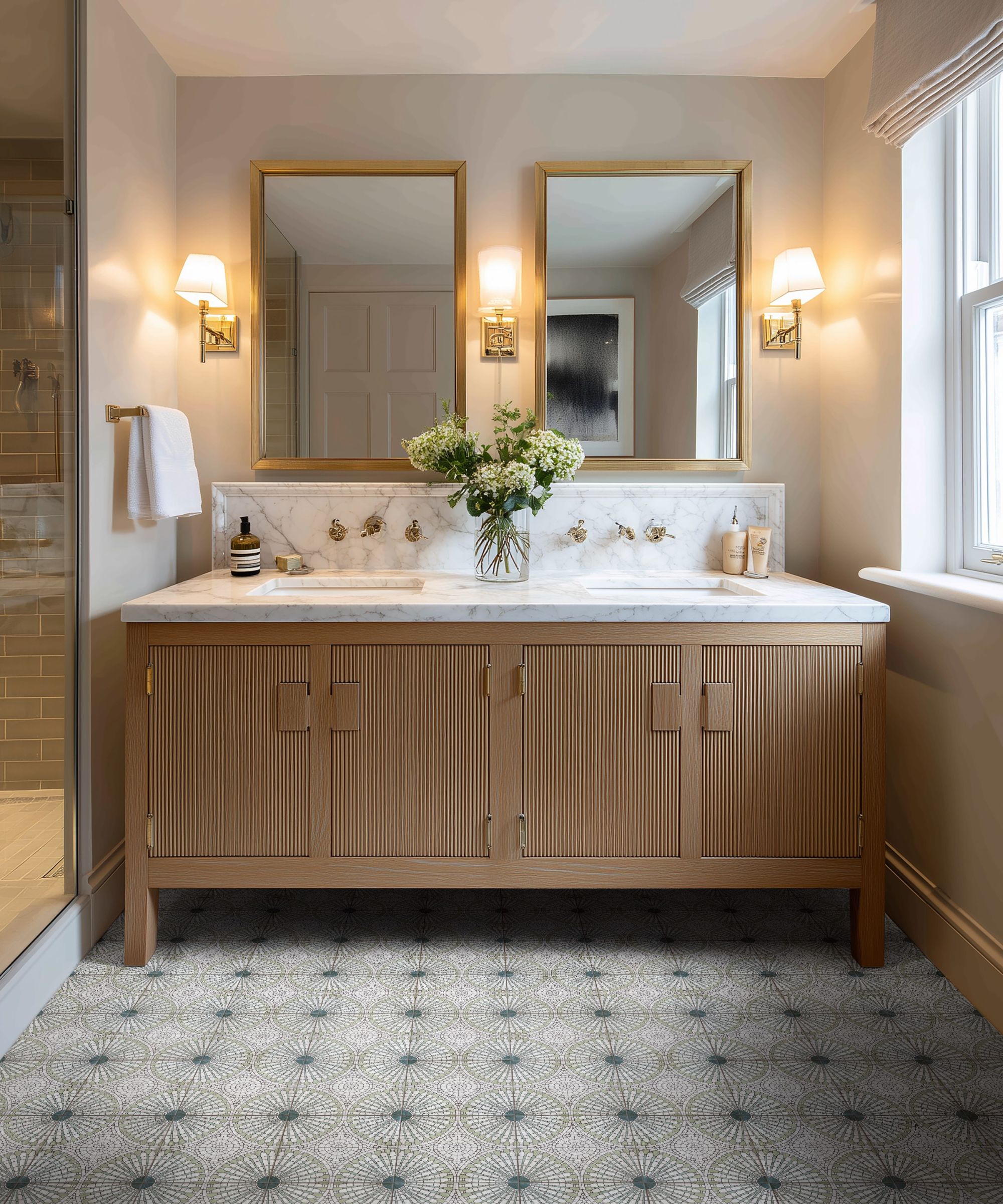
Double basins often top the list of aspirational bathroom sink ideas, but they only really work when there’s enough space to do them justice. A common bathroom layout mistake is trying to squeeze two basins into a tight footprint, which can leave the room feeling cluttered rather than luxurious.
The most successful bathroom design ideas focus on balance and proportion. For example, a generous washstand with undermounted basins, well-spaced taps and a clear run of worktop feels far more luxurious than two bowls pushed side by side.
To make double basins feel truly luxurious, it also helps to think beyond the sinks themselves. Coordinating taps, mirrors and wall lights creates a sense of symmetry that feels intentionally curated, while giving each user storage for their essentials.
12. You can’t beat a high-end shower experience
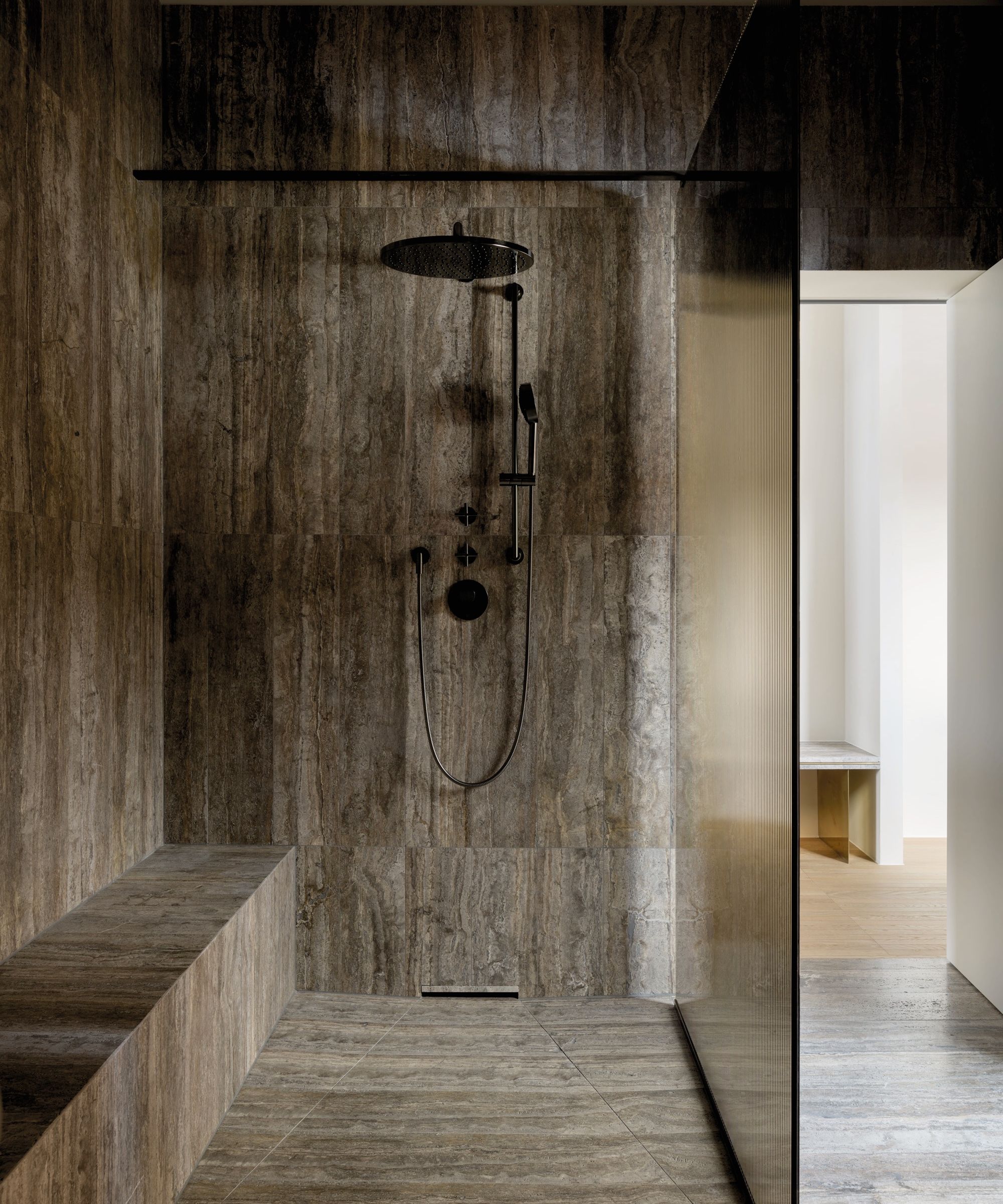
Choosing a shower that feels indulgent is the perfect place to start when designing your dream bathroom. Lewis Neathey from GROHE UK, explains: “Oversized shower heads with full-body coverage and multiple spray patterns help to recreate a spa-like experience, while concealed shower valves and wall-hung sanitaryware contribute to a clean, streamlined finish,” he says. “When combined with smart bathroom innovations and carefully chosen materials and finishes, even smaller shower rooms can feel like a hotel-style retreat.”
13. For the ultimate indulgence opt for a rainfall shower head
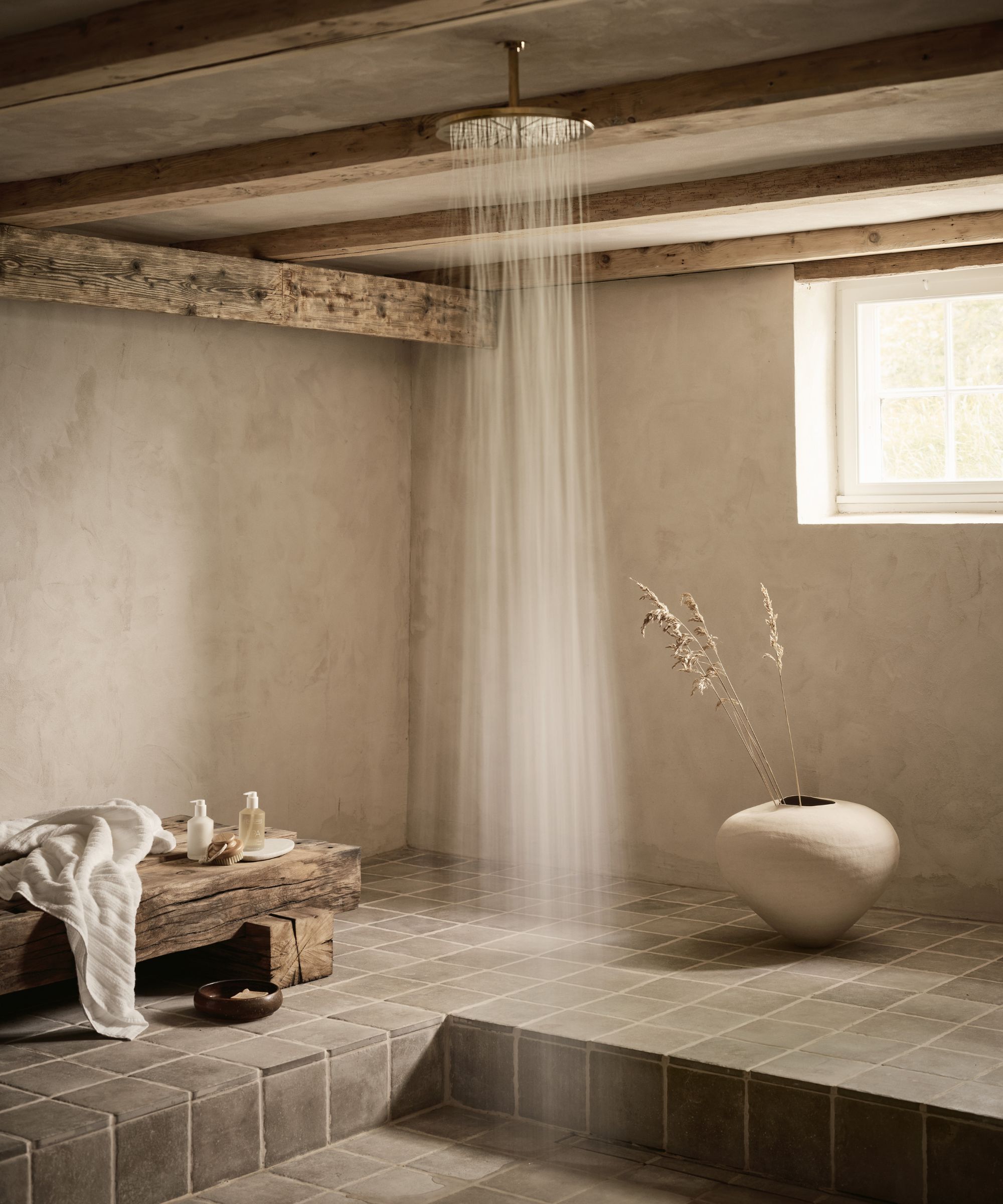
Speaking of showers, a rainfall shower is the perfect way to step up your whole wet room experience. When planning these fixtures, designers recommend going as generous as your space (and water system) will allow, as bigger heads create that full-body coverage associated with premium hotels and spas.
For the best results, it’s worth thinking beyond looks. Water pressure is just as important, so check your system can deliver the flow rate a larger rainfall shower requires (a booster pump may be worth factoring in for older homes). Pairing it with a separate hand shower is also a smart move, adding everyday practicality without compromising on that spa-like feel.
14. Use a freestanding bath as a focal point
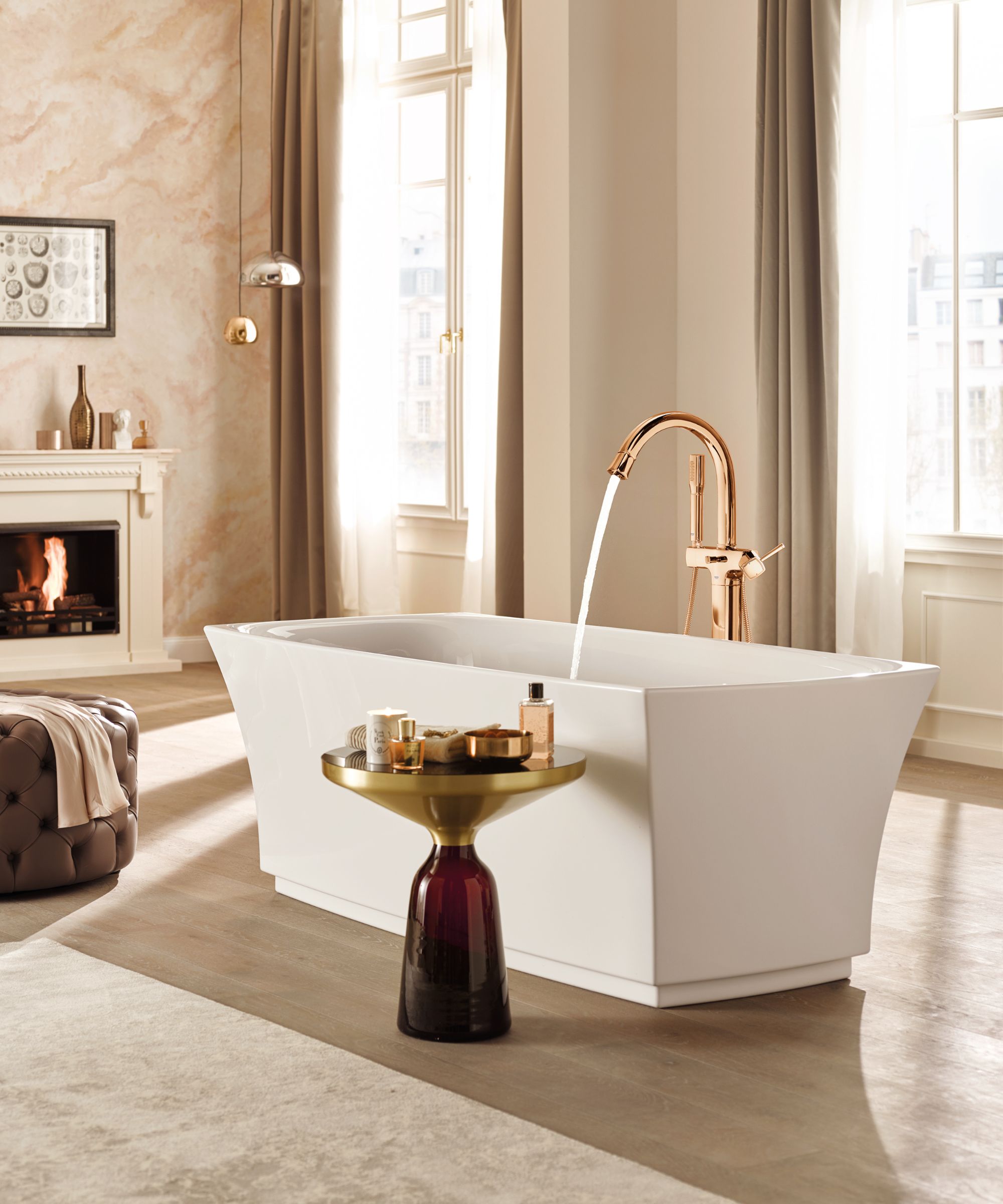
“A freestanding bath can function as the centrepiece of a luxury bathroom, as it immediately signals opulence and indulgence,” says Mike Whitfield, luxury interiors expert at LUSSO. “Paired with a bath filler or floor-standing bath tap, and positioned to take in natural light or a breathtaking view, it becomes a defining feature and invites guests to unwind.”
The trick is to give a freestanding tub space to breathe. A bath pushed too tight to a wall can feel like an afterthought, while one positioned with clear sightlines and a little breathing room looks far more intentional. For example, in the room above, the bath can be appreciated from every angle, while the floor-mounted tap in a warm metallic finish adds a refined, sculptural note.
Of course, not everyone has penthouse proportions to play with. If you’re planning a freestanding bath in a smaller bathroom, designers recommend treating the layout like a zone: allow comfortable circulation around the bath where possible, plan the plumbing early (especially for floor-mounted taps), and build in somewhere to perch bath time essentials.

With over 10 years of experience in the luxury homeware sector, and nearly 20 years of experience in e-commerce and online sales, Mike Whitfield has established strong relationships with B2C and B2B customers, including large developments and hotels worldwide. Additionally, he possesses a great eye for interior design and stays up-to-date with the latest trends.
15. Even dark spaces can feel sumptuous – especially when they lean into ‘moody’
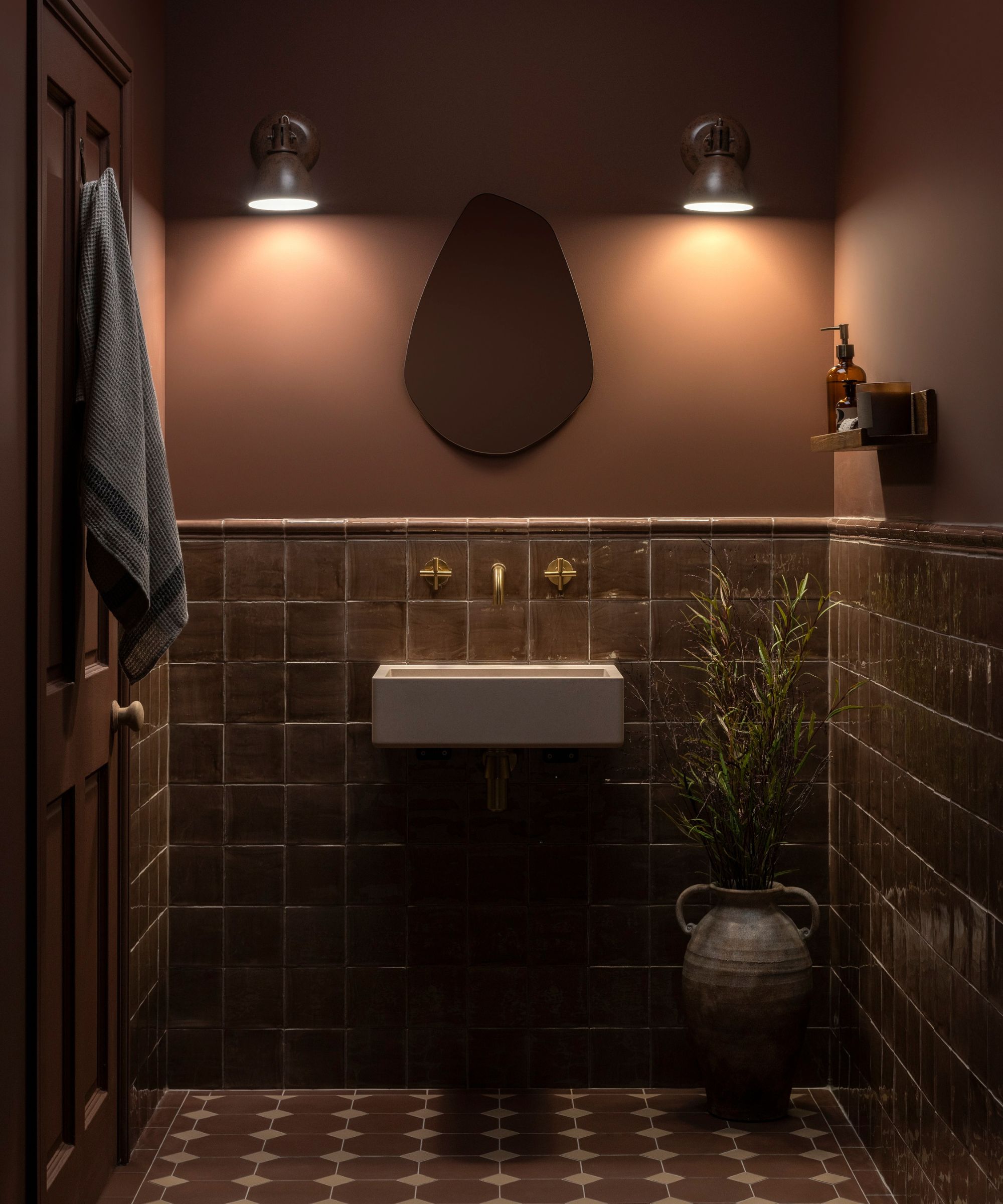
A dark bathroom can feel incredibly luxurious when it’s treated like a deliberate design choice rather than a compromise. Deep, enveloping colour has a way of instantly dialling up the atmosphere, with the knock-on effect of making a room feel more intimate and, frankly, more grown-up.
The above bathroom strikes a beautiful balance. Finished with moody Original Style tiles, the room has a rich, jewel-box quality. Brassware adds a gentle hit of polish, while the minimal basin and sculptural mirror keep everything feeling tailored.
“Burgundy has proven to be an extremely popular bathroom colour as of late,” says Mike Whitfield from LUSSO. “These moodier tones are emerging as a sought-after design choice in the home,” he says, praising it for bringing “vintage charm with a glamorous twist.”
Best of all, burgundy is more flexible than you’d think; as Mike points out, it can be layered with warm shades like blush, dusty pink, terracotta or even mustard, letting you tailor the drama to suit your space.
Top Tip: If you’re toying with the idea of painting a bathroom darker, think in layers: one dominant shade, one contrasting finish (gloss tile against painted plaster, for example) and lighting that’s warm and flattering.
FAQs
How can I make my bathroom feel more like a hotel or spa retreat at home?
“In luxury hotel and spa design, it’s the smallest details which often speak the loudest and make the biggest impact,” says Mike Whitfield, interiors expert at Lusso. He suggests focusing on finishing touches that add richness – “bathroom accessories such as marble soap dishes, bath caddies and brassware” – as well as comfort-driven details like “towel warmers and radiators styled with plush linens”.
To amplify the spa feeling, he also recommends engaging the senses: “weaving a signature scent through the bathroom experience creates an immediate sense of calm and identity,” whether that’s through diffusers, candles or subtly scented toiletries.
And for the final layer of indulgence, he points to small additions that encourage a slower pace, such as “a small stool beside the bath,” “a linen curtain that gently diffuses natural light,” or “a headrest that turns a soak into a full-body retreat.”
What design mistakes can undermine how luxurious a bathroom feels?
“Avoid clashing colours, as this can disrupt the balance of the room,” says Mike Whitfield from Lusso. “Without a cohesive palette, the room can feel disjointed rather than distinctive.”
He also warns against over styling: “You should also avoid overcrowding the space, as too much decor can obscure the beauty of finishes, materials and architectural details. Quality over quantity should always lead in luxury design.”
Finally, be careful with your material mix. “Avoid mixing too many materials,” Mike cautions. “High-quality materials and different textures are essential, but don’t overload. Have a clear vision to work with and prioritise harmony alongside the contrast of textures and materials.”
Not sold on these luxe finishes? Take a look at the bathroom trends set to shape interiors for inspiration for your own renovation, and swot up on bathroom renovation costs so you know what to expect.
View the original article and our Inspiration here
Leave a Reply