
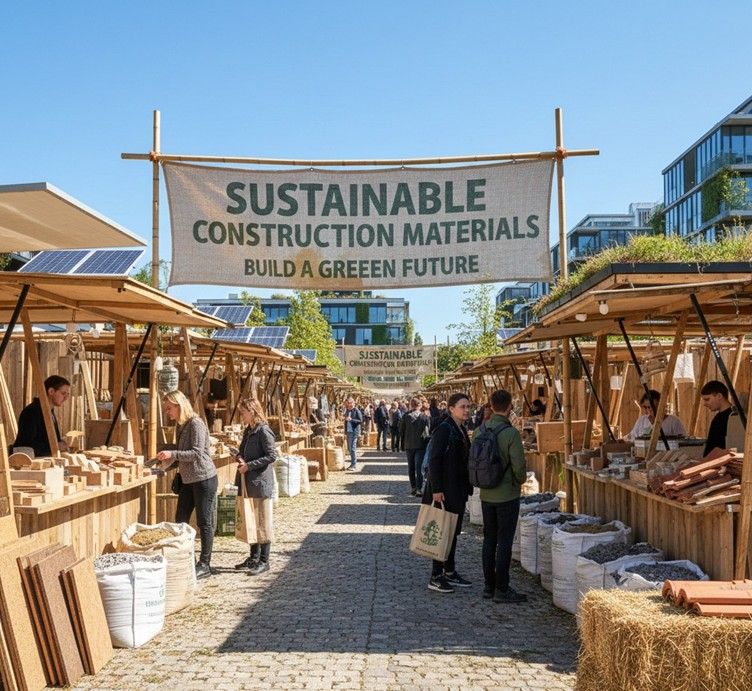
Market Summary:- According to our latest research, the Global Sustainable Construction Materials market size was valued at $328.5 billion in 2024 and is projected to reach $726.2 billion by 2033, expanding at a robust CAGR of 9.2% during the forecast period of 2024–2033. The primary catalyst fueling this remarkable growth is the escalating global emphasis on environmental sustainability, coupled with stringent regulations targeting carbon emissions and resource conservation in the construction industry. As governments and private sectors increasingly prioritize green building standards and eco-friendly infrastructure, the demand for sustainable construction materials—ranging from recycled aggregates to advanced green concrete—has surged, reshaping procurement strategies and material innovation across the value chain.
Image Courtesy of: Research Intelo
The world of construction is experiencing a monumental transition. What once revolved around traditional concrete, steel, and brick is now shifting toward responsible, resource-efficient, and carbon-neutral alternatives. The Sustainable Construction Materials Market is no longer a niche; it is now a strategic pillar of modern infrastructure development driven by climate goals, urbanization, and consumer consciousness.
From Cost to Consciousness — Why Sustainable Materials Became a Necessity
For decades, construction choices were dictated purely by cost and strength. Today, the equation has changed dramatically. The cost of ignoring the climate crisis now outweighs the price of adopting sustainable building materials. Architects, government bodies, and end-users are looking for materials that:
· Reduce carbon footprint
· Support circular economy
· Enhance energy efficiency
· Deliver long-term durability
The result is a marketplace that rewards innovation rather than tradition.
Key Forces Fueling the Market’s Momentum
1. Climate Regulations Becoming Business Drivers
Global and regional regulations advocating for net-zero carbon emissions are reshaping material sourcing. Green certifications like LEED, IGBC, and BREEAM are influencing every construction blueprint.
concrete—has surged, reshaping procurement strategies and material innovation across the value chain.
2. Corporate Sustainability Goals
Enterprises developing offices, data centers, and manufacturing units are choosing eco-friendly materials as part of ESG reporting and brand value enhancement.
3. Consumer Awareness
Whether it is residential or commercial property, modern buyers prefer sustainable buildings for reduced electricity bills, better indoor quality, and higher resale value.
Emerging Champions of Sustainable Material Innovation
The market is now rich with materials that are redefining construction science.
Cross-Laminated Timber (CLT)
Engineered timber structures are demonstrating that buildings can reach high-rise heights without depending solely on steel and concrete. CLT sequesters carbon instead of emitting it.
Recycled Metal and Aggregates
Industrial scrap and demolished structures are being re-processed to create strong, reliable construction materials — reducing waste and cost simultaneously.
Low-Carbon Concrete
Cement manufacturers are replacing limestone clinker with fly ash, slag, and geo-polymers to drastically cut emissions from one of the world’s highest CO₂-generating industries.
Hempcrete and Bamboo-Based Biocomposites
Natural fiber-based materials are rising as lightweight but strong alternatives capable of providing thermal insulation and fire resistance.
Self-Healing Materials
Concrete infused with bacteria and microcapsules that repair cracks autonomously is turning maintenance into a science of the past.
Smart Construction Meets Sustainability — A Future-Ready Fusion
Sustainability is no longer limited to physical materials alone. The sector is witnessing a convergence of IoT, BIM (Building Information Modeling), AI, and 3D printing to:
· Reduce material wastage
· Optimize design precision
· Accelerate project timelines
· Lower lifecycle costs
Imagine a world where 3D-printed recycled concrete builds a residential complex in a matter of days, or a building automatically optimizes energy consumption using embedded smart sensors. That world is no longer speculative — it is unfolding right now
Challenges That Still Need Addressing
Despite exceptional momentum, the industry faces hurdles:
· Higher upfront cost compared to traditional materials
· Limited technical awareness in emerging markets
· Supply chain fragmentation for recycled and bio-based materials
· Lack of standardized certification in some regions
However, these challenges are increasingly seen as transformation opportunities, not barriers.
The Road Ahead — A Market Built on Responsibility and Innovation
The Sustainable Construction Materials Market is pressing toward a future where:
· Every building becomes a living ecosystem
· Waste becomes a raw material
· Carbon neutrality becomes a baseline, not a badge
· Innovation dictates economic growth
Real-estate developers, governments, and technology companies are aligning on one shared realization: Sustainability is not a trend. It is the foundation of the next 100 years of global construction.
Competitive Landscape
· Holcim
· Heidelberg Materials
· CEMEX
· CRH plc
· Saint-Gobain
· Lafarge
· BASF SE
· Sika AG
· Kingspan Group
· Boral Limited
· Tata Steel
· DuPont
· Owens Corning
· Interface Inc.
· Armstrong World Industries
· CSR Limited
· James Hardie Industries
· USG Corporation
· Votorantim Cimentos
· China National Building Material Company (CNBM)
Final Takeaway
The construction sector is not just building structures anymore — it is building climate ambition into the very fabric of concrete, metal, and timber. The sustainable construction materials revolution is reshaping skylines and business strategies alike. And the question is no longer “Will green materials replace traditional ones?” but “How fast can the world adopt them?”
View the original article and our Inspiration here
Leave a Reply