
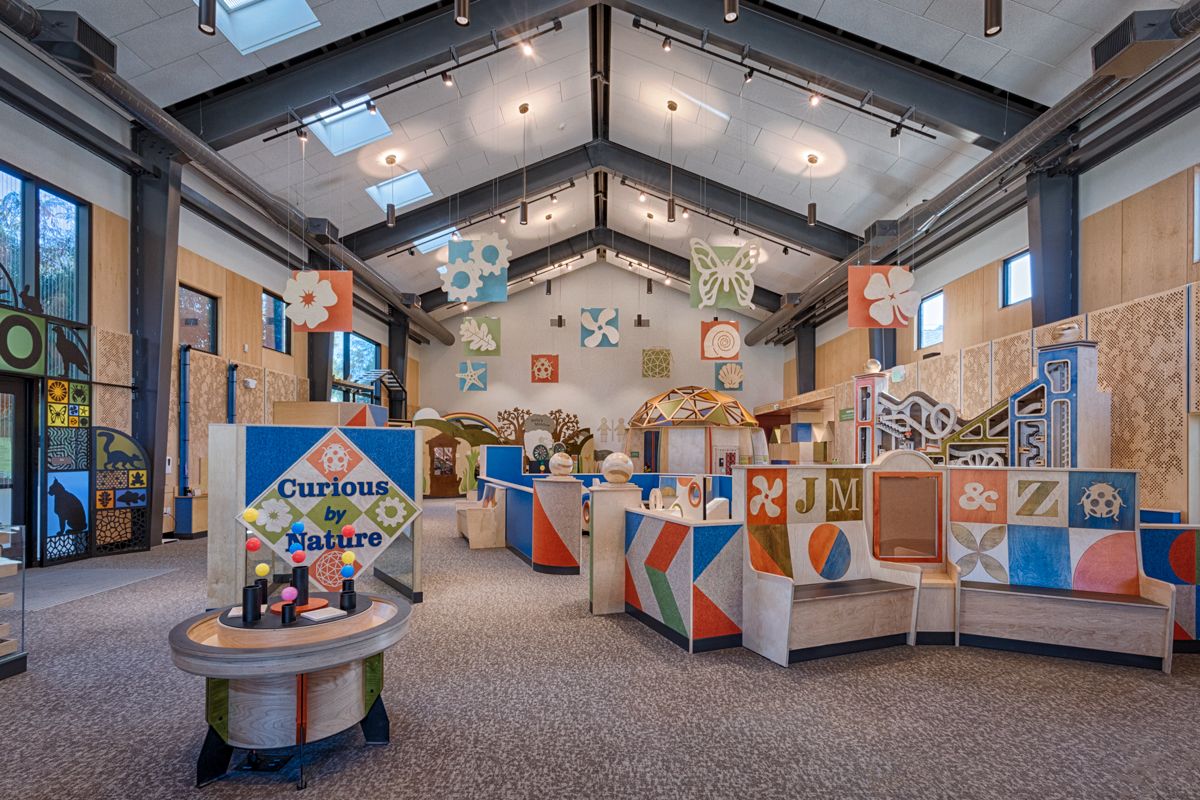
Founded in 1934, the Palo Alto Junior Museum & Zoo has been a vital cornerstone of early childhood education for the community, where generations of children and families have passed through its doors to learn, explore, play, discover and get curious about the world around them.
Featuring interactive exhibits, live animals, and hands-on programming, the center has always been a lively place, evolving to meet the needs of today’s youth. K-12 educational design as a whole has come a long way and parents, educators, and caregivers expect children’s spaces to be not only engaging but also supportive of different learning styles and sensory needs.
In educational spaces, poor acoustics could mean the difference between accessible and inaccessible learning for kids and young people. According to the American Speech-Language-Hearing Association, poor acoustical design may negatively impact child behavior, concentration levels and understanding, while good acoustics improve speech intelligibility by more than 35%, directly affecting learning outcomes.
Recognizing the impact acoustical design has in supporting a well-rounded learning environment, the City of Palo Alto collaborated with Kirei to outfit the museum, enhancing both the acoustic and visual quality of its newly designed spaces. This project aimed to address the high noise levels while maintaining a visually engaging and sustainable design.
The city’s ongoing Green Building initiative mandates the use of healthy building materials, leading to the selection of acoustic solutions that foster a more enjoyable experience for both kids and adults while ensuring compliance with the city’s building codes and fire regulations.
Sustainability as a Guiding Principle
The City of Palo Alto has long prioritized environmentally responsible practices, with a mission to reduce energy, water and natural resource consumption to improve Palo Alto citizens’ well-being. Kirei’s products aligned seamlessly with those values.
Crafted from recycled PET, Kirei’s acoustic products repurpose roughly 235 single-use plastic bottles per panel. This process diverts waste from landfills and waterways, connecting directly to the museum’s mission of inspiring care for the natural world.
All products meet or exceed CDPH standards for VOCs, are Red List Free and Declare Label qualified/certified, and contribute to LEED and WELL Building credits.
For a museum dedicated to teaching the youth about discovery, ecology and responsibility, these choices carried meaning beyond performance. The materials themselves are a part of the story, modeling how design can be both beautiful and responsible.
Enhancing the Exhibit Hall
Upon entering, guests are greeted by the 3,000-square-foot main exhibit hall, lined with activity stations. This open-plan space proved to be one of the greatest challenges of the acoustic design. In this layout, sounds of laughter, running and chatting can carry easily, so the goal was to balance acoustic control while adding visual interest.
Kirei’s Simple Baffles were selected for this space and strategically installed on the ceiling. Suspended overhead, the baffles introduced rhythm and texture while softening the auditory experience below.
Simple Baffles are customizable prefabricated acoustic ceiling panels, designed to be arranged around complex ceiling features such as HVAC, sprinklers and lighting. With an ASTM E84 Class A Fire Rating and Noise Reduction Coefficient (NRC) rating of 0.60, the panels meet the museum’s safety guidelines while significantly improving sound absorption in the noisy space.
Creating a Calming Nook
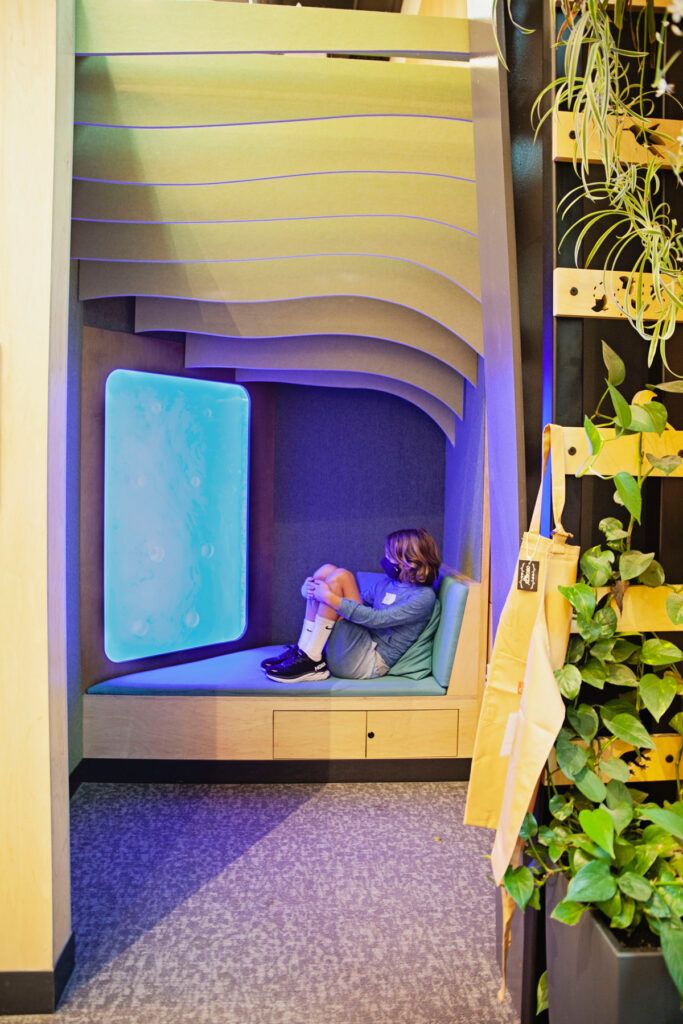
Another innovative feature of the redesign was the creation of an 80-square-foot Calming Nook for children with sensory sensitivities. This small yet impactful addition provides a retreat for guests who may need a quieter, more controlled space to unwind.
This designated quiet area also offers an alternative place to read and learn apart from larger groups, supporting focus and concentration.
To bring this space to life, the Calming Nook required a sense of enclosure without a fully closed ceiling, allowing for necessary sprinkler system access while still providing acoustic support. Custom-cut Simple Baffles from Kirei also proved to be the ideal solution, effectively reducing noise while maintaining an inviting atmosphere.
For kids who may become overstimulated easily and need to step away from the chaos, this space offers a quiet place to relax and recharge. Having the ability to withdraw from the activity and re-center makes the museum accessible to a wider range of visitors.
For caregivers, the nook provides reassurance that their children’s needs are anticipated and respected, allowing them to make the most out of their visit.
 Keeping Inclusivity at the Forefront
The transformation of the Palo Alto Junior Museum & Zoo demonstrates how attention to acoustics can profoundly shape the visitor experience. In children’s spaces, especially where sensory input is high, the ability to offer balance is invaluable.
For adults, this redesign allows for easier communication and the ability to guide activities without distractions. For kids, acoustic control fosters a well-supported environment that encourages both energetic play and restorative quiet. Most importantly, all guests have the ability to engage with the exhibits on their own terms, leaving a lasting impression.
The Impact of Acoustical Design
As communities continue to invest in public cultural spaces, the Palo Alto Junior Museum & Zoo serves as an inspiring example of how acoustics, sustainability and inclusivity can come together in design. The project demonstrates that addressing the sensory environment is not an afterthought, but a central component of creating places where everyone feels welcome.
By combining a rich legacy with forward-thinking design, the museum has ensured its role as a place of discovery and joy for future generations. Through careful planning, collaboration and innovation, the team created a facility that truly balances the chaos of exploration with the comfort of quiet.
Dana Pucillo serves as VP of Acoustic Solutions at Carnegie. With 30-plus years of interior design experience, she builds teams and processes that bring to market innovative, sustainable, and high performing acoustic products. Her work lies at the intersection of exceptional design and environmental stewardship and she uses her deep expertise to collaborate on design solutions that drive the commercial acoustics industry forward. Pucillo enjoys collaborating with multidisciplinary designers to develop market-driven, sustainable, and high-performing acoustic solutions.
View the original article and our Inspiration here
Leave a Reply